

Oil Barons, Jadid Reformers, and the First Azerbaijan Republic
How the Jadid movement helped build the Azerbaijan Democratic Republic.
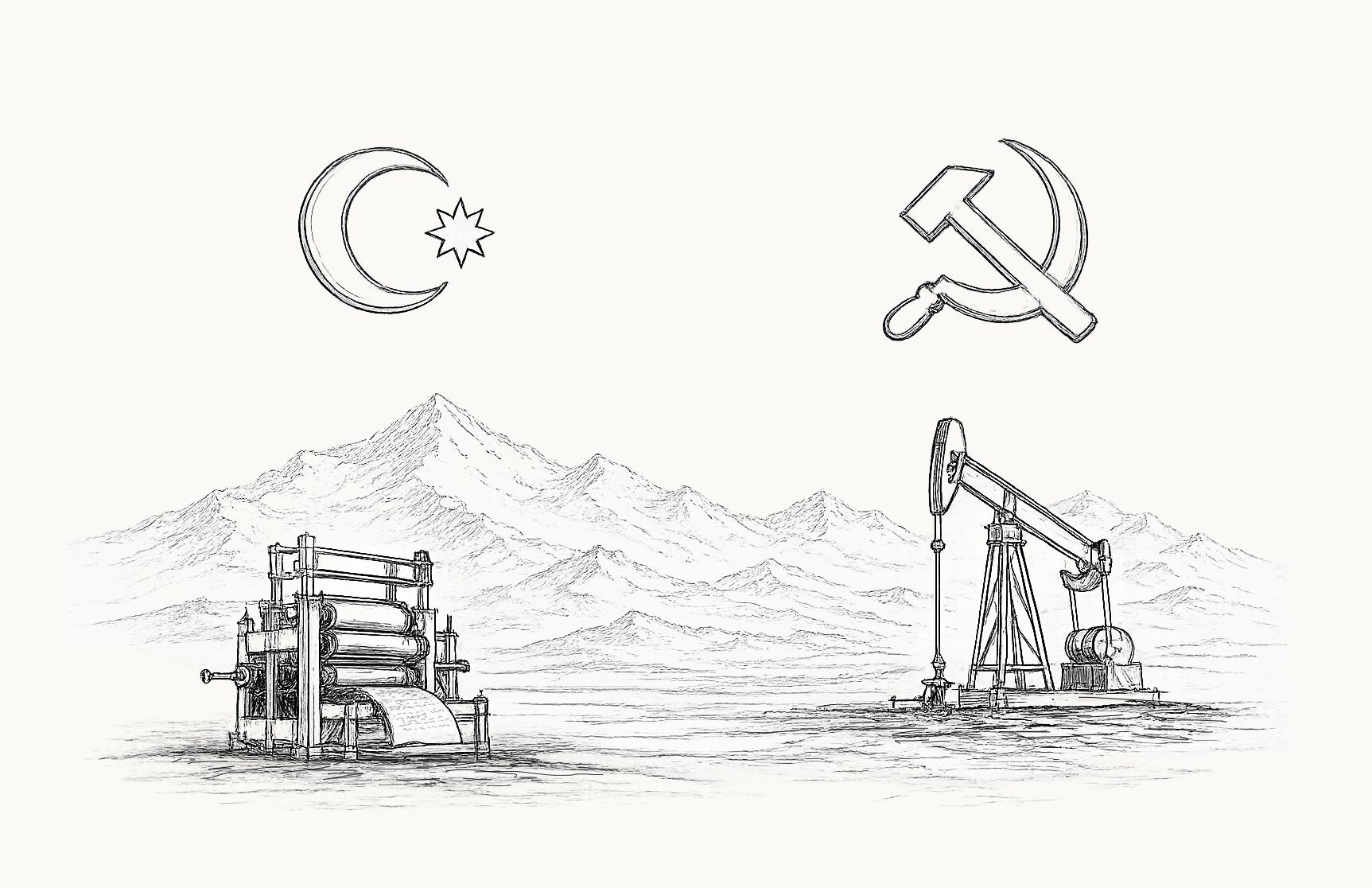
On the afternoon of 28th May 1918, in the Russian Imperial Viceroy’s palace in Tbilisi, the Muslim delegates of the now-dissolved parliament of the Transcaucasian Democratic Federative Republic (TDFR) gathered to vote on a six-article declaration of independence for a country they proposed to call the Azerbaijan Democratic Republic (ADR).
The group gathered in Tbilisi out of necessity. Baku, the proposed capital for Azerbaijan, was under the control of local Bolsheviks, who had seized the city from the TDFR government in April 1918. The palace in which the delegates gathered had not hosted a viceroy of the Russian Empire since Tsar Nicholas II’s abdication in February 1917. The October Revolution later that year plunged the former Russian Empire into a bloody civil war that pitted Lenin’s Reds against nationalist Whites. In the South Caucasus, the Ottoman Empire, Great Britain, and Germany rushed to fill the vacuum left by the collapse of the Russian Empire, while local nationalist movements and socialist revolutionaries struggled to establish their own states. The TDFR itself did not last long. Georgia seceded from the TDFR on 26th May 1918; Armenia would declare independence on the 28th.
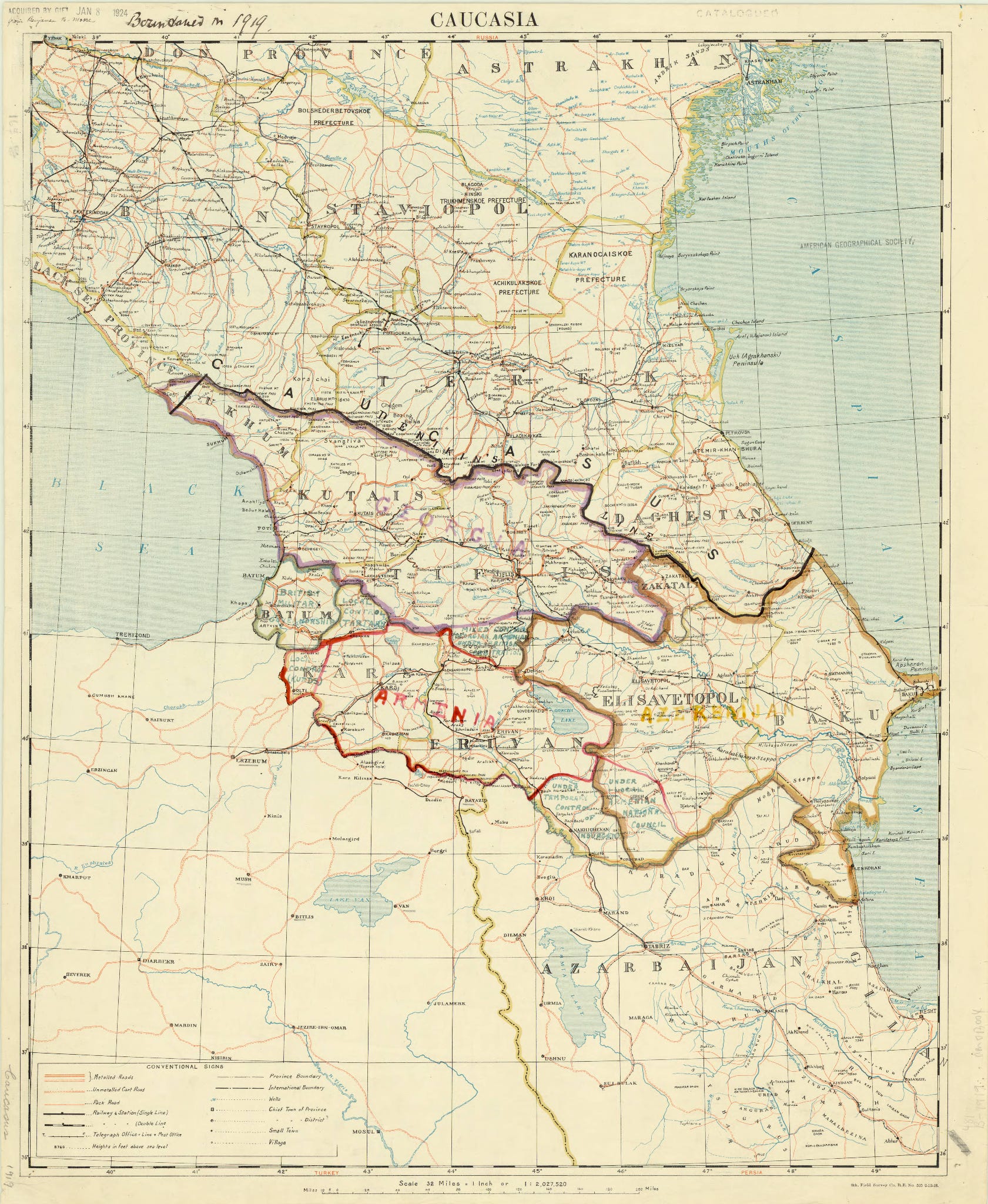
Hasan Bey Aghayev, a Moscow-trained doctor, journalist, and vice chairman of the group, put the question of independence for the ADR to the assembled Muslim delegates. Twenty-four voted in favour, while two abstained. The declaration was read aloud, establishing democratic-republican governance and guaranteeing all citizens full civil and political rights, regardless of ethnic origin, religion, class, profession, or sex. Telegrams were dispatched to notify the world’s capitals. The new government was swiftly established in Ganja before relocating to Baku in September 1918, following the Ottoman army’s capture of the city. The ADR would last 23 months before it was swept away by the Bolsheviks.
That short period of time featured a remarkable cohort of statesmen and intellectuals whose biographies traced the full breadth of the early 20th-century world of Muslim modernism: Mammad Amin Rasulzade, a journalist and one-time socialist revolutionary who edited one of the most important newspapers of the Iranian Constitutional Revolution; Alimardan Bey Topchubashov, a Saint Petersburg-trained lawyer who co-founded the first political party of Russian Muslims; Fatali Khan Khoyski, a Moscow-educated jurist and former member of the Russian State Duma who served as the republic’s first Prime Minister; Nasib Bey Yusifbeyli, a writer for the Jadid press who married the daughter of its founder, Ismail Bey Gaspıralı; Rashid Khan Gaplanov, a Sorbonne-educated lawyer who co-founded Baku State University; and behind them all, the oil baron Haji Zeynalabdin Taghiyev, whose fortune built the schools, newspapers and theatres that produced the founding generation and funded many of the short-lived republic’s state-building projects.
The Crossroads of Eurasia
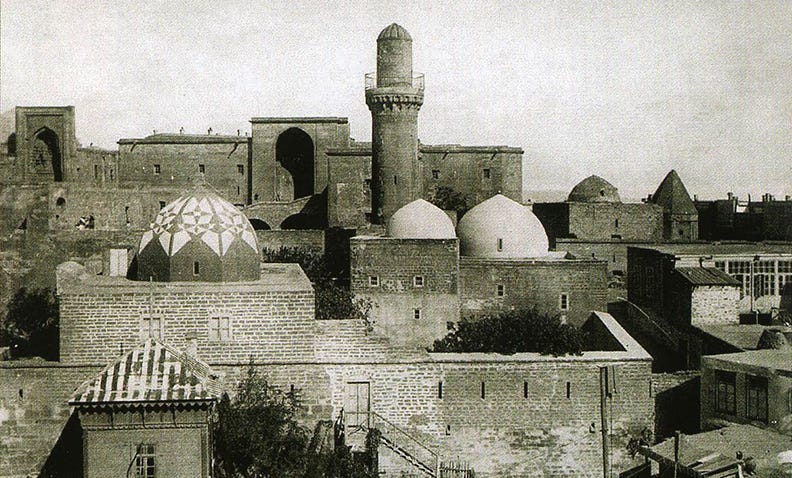
Baku at the turn of the 20th century was a city that existed in several ages at once. Within the crenellated walls of the Old City—a labyrinth of narrow alleyways, crumbling caravanserais, and hallowed turbes that had stood since the 12th century—life moved to the tempo of medieval Islamicate. The ancient ramparts of the Maiden Tower brooded over the rooftops. Merchants opened and closed shop to the rhythm of the daily prayers; craftsmen beat and chiselled and wove and hewed at a cadence unchanged since the days of the Shirvanshahs. The adhan drifted across the breeze from limestone minarets that had watched over the city since long before the Tsar’s armies stormed down across the Caucasus. Women in chadors moved through covered bazaars where the scent of saffron and sumac mixed with the sharp smell of kerosene wafting over from the shores of the Caspian.
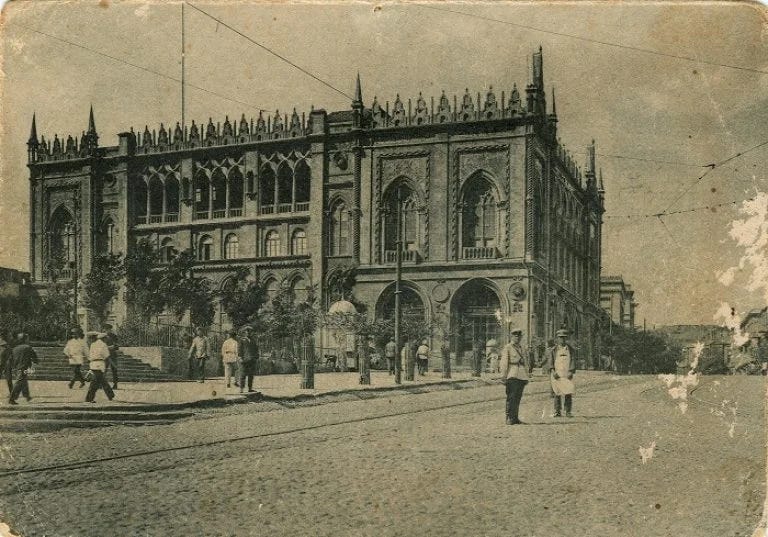
The oil boom that began in the 1870s had transformed Baku from a sleepy Caspian garrison town into the petroleum capital of the world. By 1901, the Absheron peninsula produced more than half of global oil output, 11 million tonnes a year. The wealth this generated remade the urban landscape. Outside the old walls, wide boulevards lined with plane trees connected mansions built in every conceivable European style: Venetian Gothic, Baroque, Art Nouveau, Neoclassical. Polish architects left a particular mark, designing buildings that would not have looked out of place in the 6th Arrondissement, earning Baku the epithet of “Paris of the Caucasus.”
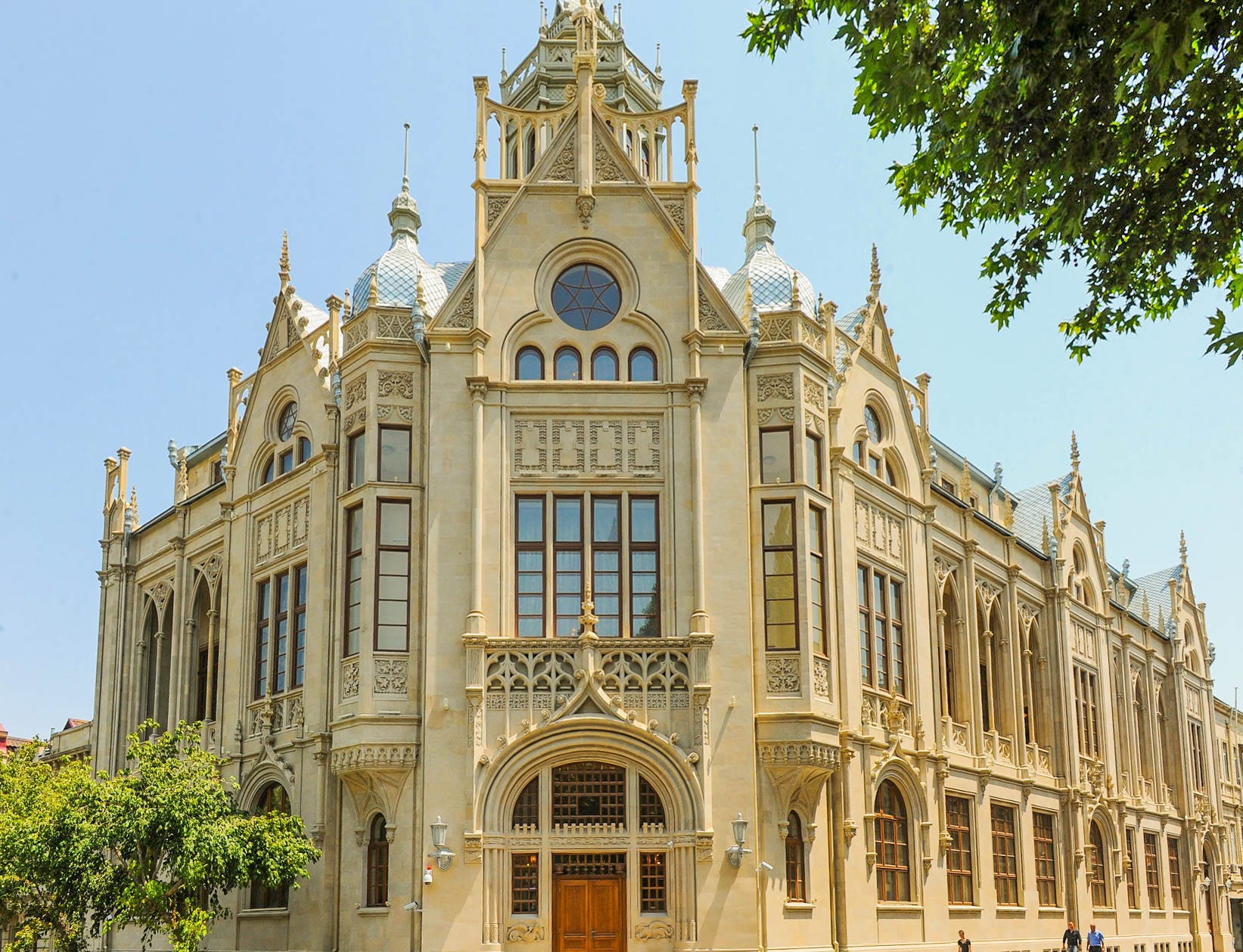
The oil barons competed to outdo one another: Musa Naghiyev built the Ismailiyya Palace in the style of Venice’s Ca’ d’Oro; Murtuza Mukhtarov commissioned a Gothic palace for his wife, modelled on a building she had admired in France. There was a European-style theatre, an opera house and promenades along the Caspian seafront where the wives of oil magnates wore the latest Paris fashions.
The city’s population was an extraordinary mosaic. At the start of the First World War, roughly a third were Russian, a third Azerbaijani, and a fifth Armenian, with the remainder comprising Jews from across the Pale of Settlement, Germans, Poles, Georgians, Greeks, and a scattering of Americans, Frenchmen, and Swedes drawn by the oil trade. The Nobel brothers and the Rothschilds had invested heavily. 12 British oil companies operated in the region. A Zoroastrian fire temple stood within sight of an Orthodox cathedral, Muharram passion plays were performed in the same season as Italian opera, and the sons of Muslim landowners studied alongside the children of Armenian merchants at the Imperial Russian Humanistic High School. In Kurban Said’s novel Ali and Nino, a Russian schoolteacher asks the young protagonist, Ali Khan Shirvanshir, whether this polyglot city belongs to Europe or Asia. It was an impossible question to answer.
The declaration of independence for the ADR in Tbilisi belonged to a moment—spanning the mid-19th century and the early decades of the 20th— in which Muslim elites across an enormous geographical arc, from Morocco to the Dutch East Indies, were grappling with the same questions: how to reform and modernise without surrendering to European cultural hegemony; how to reconcile Islamic tradition with the demands of the industrial age; how to harmonise Muslim communal identity with the blossoming of national consciousness; and how to construct political institutions adequate to a world of nation-states, mass communication, and mechanised total war.
The responses varied in form but shared a common grammar. In the Arab world, Muhammad Ali Pasha brought the Egyptian state into line with European standards and forged ahead with early industrialisation. The Arab Nahda (‘Renaissance’) produced a rich ecosystem of newspapers, literary journals and political societies in Cairo, Beirut and Damascus. In the Ottoman Empire, sweeping modernisation of the state was accompanied by the emergence of a fecund public sphere in which the complexities of Ottomanism, Islam, Turkishness and modernity were debated in print. On the Indian subcontinent, the Aligarh movement sought to create a modern Muslim intelligentsia capable of navigating British rule. And across the Turco-Islamic belt of the Russian Empire—from Crimea through the Volga-Ural region to Central Asia—the Jadid movement constructed a network of schools, vernacular newspapers, and reform-minded intellectuals that represented perhaps the most sophisticated attempt anywhere in the Muslim world to create a modern Islamic culture from within.
Azerbaijan sat at the crossroads of all of these currents. The elites who founded and subsequently governed the ADR read Gaspıralı’s Terciman and contributed to Ottoman journals. They studied medicine in Saint Petersburg and law in Paris. They observed the Iranian Constitutional Revolution from across the River Aras and the Young Turk Revolution from editorial offices in Istanbul. They absorbed the Jadid commitment to modern education and the late Ottoman debate over the relationship between Turkic identity and Islamic heritage. They were connected to one another through family, profession and political organisations and materially enabled by the vast wealth of Baku’s oil industry. What follows is a small selection of their biographies that, taken together, reads like a map of the intellectual world of early 20th-century Muslim modernism.
The Oil Barons
The ADR’s story begins not with politics but with petroleum. Baku was the birthplace of the modern oil industry, with the first mechanically drilled oil well in the Bibi Heybat oilfield in 1846, preceding mechanical drilling in the United States by just over a decade. However, the fullest realisation of the immense energy wealth hidden beneath the Absheron peninsula would only occur in the 1870s, when the Tsarist government pursued privatisation. They abolished the ancient land tenure system and opened the Baku oil fields to competitive bidding, and men with no formal education and negligible capital found themselves, within a few years, among the wealthiest individuals in the Russian Empire.
Zeynalabdin Taghiyev had worked as a mason from childhood to support his seven sisters. By the age of 18, the illiterate young man had established himself as a minor building contractor in the Baku region. He went on to acquire a small kerosene plant and, by 1873, had saved enough to buy, with two partners, a plot of land near the Bibi Heybat oil field. The trio drilled for years and found nothing. His partners sold up and returned to Baku, but Taghiyev stayed on, operating the wellhead personally day after day. In 1877, he struck oil.
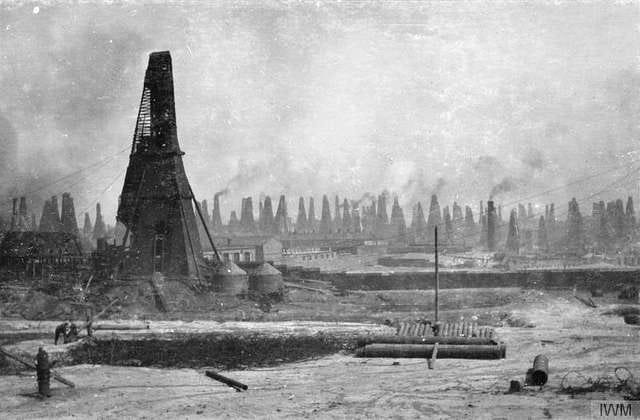
The riches flooded in. By 1887, the refining arm of Taghiyev’s firm, H.Z.A. Taghiyev Petroleum Production Company (TPP), was the fourth-largest operation in Baku (and the largest Azerbaijani-owned company), producing 2,000 barrels per day. In 1890, he acquired the Caspian Steamship Company, thereby achieving full vertical integration for TPP from the wellhead to the port. In 1897, he sold the majority share to British investors for five million roubles. With the proceeds of the sale, Taghiyev built Azerbaijan’s first modern textile factory at the village of Ahmadli near Baku. The factory was designed as a self-contained compound with free worker housing, a power station, a school and a medical clinic. He also co-founded the Baku Trade Bank and invested extensively in fisheries along the Caspian coast.
Shamsi Asadullayev, born to a farming family in the village of Amirjan on the Absheron peninsula, had started out hauling oil by cart at the kerosene refinery of Vasily Alexandrovich Kokorev, one of the wealthiest men in Russia. The young Asadullayev diligently worked his way up from labourer to deputy director before leaving to open his own plant in 1875. In 1892, Asadullayev invested life savings in a promising oil site on the outskirts of Baku. His bet paid off three years later, when oil burst from the ground. By 1909, the company that had started 17 years earlier with five hundred roubles was valued at ten million and owned 37 wells, a fleet of tankers and refineries across the Russian Empire and Iran.
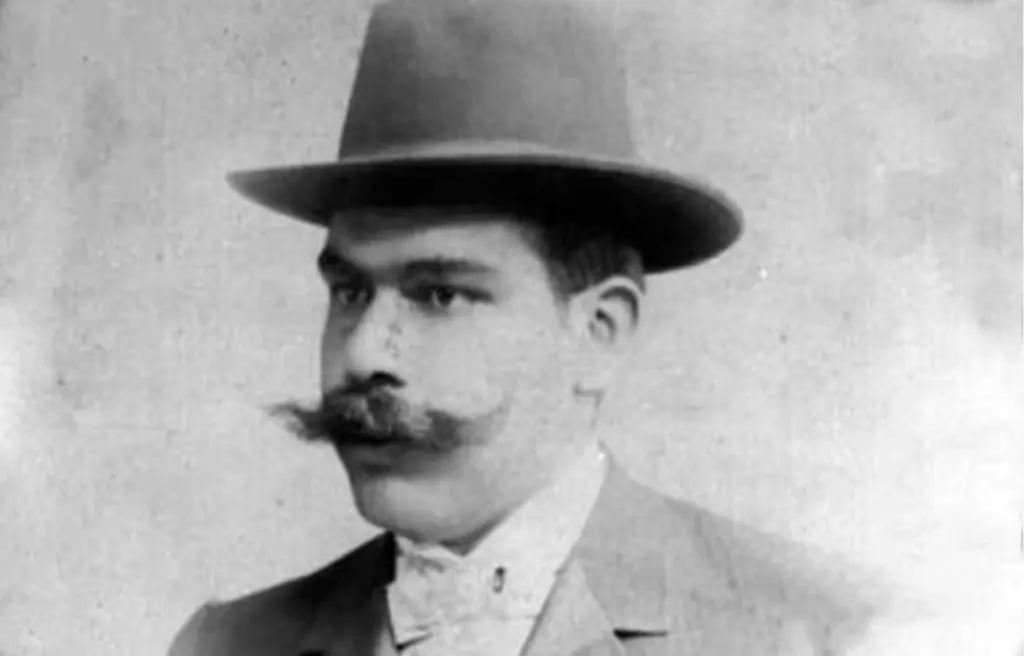
Murtuza Mukhtarov, another enterprising Amirjan villager, had worked as a plasterer and a cart driver before finding employment at a drilling office, where he climbed the ladder from labourer to foreman to driller. Despite lacking any formal education beyond primary school, Mukhtarov taught himself mechanical engineering in his spare time and went on to patent a new type of hammer drill known as the ‘Baku drilling system.’ His invention proved useful in the last decade of the 19th century, when he founded his own drilling company and the first oil-equipment factory in the Russian Empire, based just outside Baku.
The Baku oil barons lived lavishly but spent generously on their city. Taghiyev financed a pipeline to bring fresh water from the mountains near Quba, established the Baku fire service, and provided long-term loans to the Baku City Council for paving streets and laying out parks. His most celebrated project was the first modern school for Muslim girls in the Russian Empire, opened in 1901, for which he secured the Tsar’s permission by naming it after Empress Alexandra. Asadullayev funded the Baku Real School—a German-style Realschule emphasising science, mathematics and modern languages—and established scholarships for Muslim students at the Alexander Tiflis Teacher Training Institute, the largest of its kind in the Caucasus.


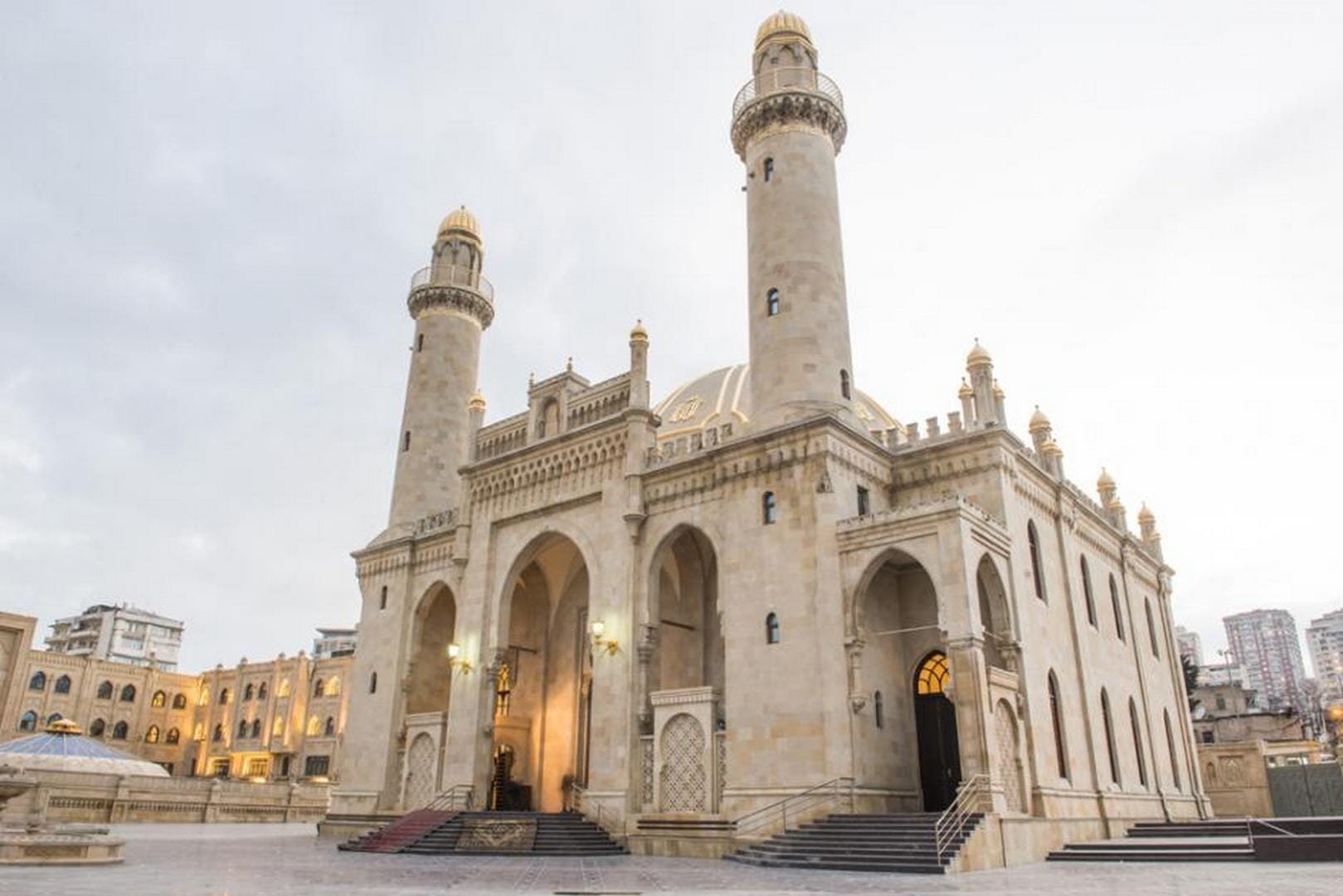
Asadullayev, along with Taghiyev, funded scholarships for dozens of young Azerbaijanis to study abroad at the best universities in France, Germany, Poland and Russia. The first Azerbaijani to graduate from the Saint Petersburg Institute of Civil Engineers, the architect Ziver Bey Akhmedbekov, did so in 1901 on an Asadullayev scholarship. He returned to Baku and became the city’s leading architect, designing the iconic Taza Pir Mosque and the Baku Ophthalmology Institute, among many other public buildings. Alimardan bey Topchubashov, who would go on to chair the ADR Parliament and lead its diplomatic delegation to the Paris Peace Conference, Nasib Yusifbeyli, who would serve as the ADR’s first Minister of Finance and its last Prime Minister, and several other future Azerbaijani statesmen and public figures received their higher education thanks to funding from Taghiyev.
Arguably, Taghiyev’s most consequential investments were in the press. The newspapers and journals he funded became important conduits through which a nascent Azerbaijani national identity was articulated, and the case for Muslim political and economic advancement in the Russian Empire was advanced. In the 1880s, Taghiyev purchased the Russian-language newspaper Kaspi and installed as its editor a young Topchubashov who had recently returned from studying Law in Saint Petersburg. Through Kaspi, Topchubashov called for extending full political and legal rights (including the right to a jury trial) to Muslim subjects of the Tsar and for introducing local self-governance in the Caucasus. Hundreds of his articles appeared in its pages over the next two decades. Topchubashov formed the nucleus of the first Azerbaijani press dynasty, marrying the daughter of Hasan Bey Zardabi, founder of Akinçi, the first Azeri-language newspaper.
Akinçi, established in 1875 and printed in Istanbul, became a vehicle for secular education and social reform, written in a stripped-down vernacular Azeri Turkish purged of the Persian and Arabic loanwords that dominated literary culture. Zardabi, a Moscow-trained naturalist influenced by Russian populist ideas, believed that the Muslim clergy’s near-monopoly on literacy—maintained through the exclusive use of Persian and Arabic—was a major obstacle to the modernisation of Azerbaijani society. The Tsarist authorities shut Akinçi down in 1877 as “harmful and politically unreliable” and exiled Zardabi to his native village in a remote corner of Azerbaijan.
Along with Kaspi, Taghiyev funded Hayat and Füyuzat, the Azeri-language journals through which Ali Bey Hüseynzade articulated the formula of “Turkification, Islamisation, Modernisation”—the proposition that Muslim Turks should cultivate a national identity rooted in Turkic language and culture (as opposed to the strongly Persian-influenced high culture of the Ottomans) and adopt the institutions and scientific learning of modern European civilisation while preserving the core tenets and practices of Islam. Hüseynzade was born in 1864 in a small town near Baku, to a family of Muslim religious scholars; his grandfather had served for 32 years as the Russian-appointed Sheikh ul-Islam of the Caucasus. He studied physics and mathematics at Saint Petersburg University, then moved to Istanbul, where he entered the Medical Faculty of Istanbul University. He went on to serve as a military doctor in the Ottoman army and became a co-founder of the Committee of Union and Progress, the secret revolutionary society—better known as the Young Turks—that would seize power in the Ottoman Empire in 1908. His poem “Turan,” composed during his student years, imagined a spiritual and cultural homeland uniting all Turkic peoples from the Balkans to Central Asia, and is widely regarded as one of the earliest literary expressions of pan-Turkic consciousness.
Hüseynzade had a strong intellectual influence on Ziya Gökalp, the Ottoman sociologist and nationalist thinker whose works Turkification, Islamisation, Modernisation (1918) and The Principles of Turkism (1923) would provide much of the ideological inspiration for Mustafa Kemal Atatürk’s Turkish Republic. Gökalp himself acknowledged the intellectual debt to Hüseynzade but took the tripartite formula of “Turkification, Islamisation, Modernisation” in directions Hüseynzade probably did not intend, particularly in subordinating Islam to the nation rather than treating it as a co-equal pillar.
The Statesmen
In the last decade of the 19th century, in a small village near Baku, a mullah named Alakbar Rasulzade made the consequential decision to send his son, Mammad Amin, to complete his secondary education at a modern school rather than in a traditional madrasa. That school was the second Russian-Muslim school in Baku, directed by Sultan-Majid Ganizade, a colleague of Gaspıralı who had travelled with him in Central Asia to promote the Jadid curriculum and pedagogical method. Around the same time, a young Nasib Bey Yusifbeyli was heading to Novorossiysk University in Odessa to study law after completing his high school education at the German gymnasium in his hometown of Ganja.
Upon graduating, Yusifbeyli moved to the Crimean city of Bakhchisaray. After the fall of the Crimean Tatar Khanate to the Tsar in 1783, Bakhchisaray slowly became a provincial backwater, but in the late 19th century, the city underwent an Islamic cultural and intellectual renaissance. The khans’ old capital was the centre of the Jadid movement, where Gaspıralı printed Terciman, the most influential Muslim newspaper in the Russian Empire and the primary conduit for promoting his modernising programme. Yusifbeyli took up a post at the paper and, in 1906, married Gaspıralı’s daughter Şefiqa, who herself edited the women’s Jadid magazine, Alem-i Nisvan (‘Women’s World’).
Across the Black Sea in Nukha (presently known as Shaki), in the foothills of the Greater Caucasus in northwest Azerbaijan, the aristocratic Fatali Khan Khoyski, whose father and grandfather had served as officers in the Tsar’s army, was preparing to leave for the Law Faculty of Moscow State University. While studying in Moscow, Khoyski fell in love with a local Russian woman, Eugenia Vasilevna. The young couple married swiftly, Eugenia taking the name Jeyran Khanum upon converting to Islam. Unlike Yusifbeyli, who did not find his calling in the law, Khoyski practised as an attorney throughout the Caucasus, including serving as assistant state prosecutor at the Yekaterinodar (Krasnodar) district court. At the opposite end of the Caucasus, Rashid Khan Gaplanov, scion of a noble Dagestani Kumyk family (and the ADR’s future Minister of Education), was sitting his final exams at the Vladikavkaz gymnasium and looking forward to a move to Paris, where he would study Law at the Sorbonne. A couple of years into his studies, he married Olga Efimovna Arshon, a Russian Jewish medical student. Gaplanov graduated in 1910 and immediately took up a teaching position at Istanbul University, before returning to Vladikavkaz in 1913 to practise law.
The upheavals of the early 20th century thrust these young men into politics. In January 1905, Tsarist troops fired on peaceful demonstrators in Saint Petersburg, triggering a wave of strikes, mutinies and uprisings that convulsed the Russian Empire. Tsar Nicholas II was forced to concede a constitution and a national parliament, the Duma, the first elected legislature in Russian history. The revolution opened space across the Russian empire for Muslim political activity, and the Azerbaijani intelligentsia moved swiftly to exploit it.
Rasulzade, barely 20 years old and now a student at the Baku Technical College, co-founded Hümmet—a Muslim social-democratic party created to organise Azerbaijani workers in the oil industry—and threw himself into revolutionary activity in Baku. Topchubashov, the campaigning editor-in-chief of Kaspi, co-founded the Ittifaq al-Muslimin, the first political party of Russian Muslims, established at an all-Russian Muslim congress in Nizhny Novgorod. The party’s programme mirrored Kaspi’s editorial line: political equality for all subjects of the Russian Crown and the introduction of local self-governance and modern courts across the Caucasus. Topchubashov won the election to the First State Duma. Khoyski won the election to the Second State Duma, representing Elisavetpol (Ganja) Governorate in 1907. A member of the Constitutional Democratic Party, the Russian empire’s main liberal party, he made a name for himself in the chamber as a critic of Russian colonisation policies and demanded local autonomy for subject peoples.


The Tsar dissolved the Second Duma in June 1907, after the legislature had proved unmanageably oppositional. The dissolution was accompanied by a unilateral change to the electoral law that sharply reduced the representation of workers, peasants and non-Russian nationalities, effectively ending the brief experiment in Russian parliamentary democracy. Khoyski returned to the Caucasus and worked as a juror in the courts of Elisavetpol and then Baku. Rasulzade’s trajectory was more turbulent. By 1909, Tsarist persecution forced him to flee. He went to Iran, where he became editor of Iran-e Now, a leading Persian-language newspaper of the Constitutional Revolution. When Russian troops entered Iran in 1911 to help the Qajar court suppress the constitutional movement, Rasulzade moved to Istanbul. From the Ottoman capital, he coordinated with colleagues in Baku to establish Müsavat, an initially pan-Islamic and, to a lesser degree, pan-Turkic political organisation aimed at securing autonomy for the Russian Empire’s Turkic Muslim subjects.
The Romanov amnesty of 1913 allowed Rasulzade to return to Baku, where he transformed Müsavat into the principal vehicle of Azerbaijani nationalism. Rasulzade’s time in the Young Turk-era Istanbul had left its mark on his political thought, with Turkic ethnic and linguistic identity now gaining precedence over Muslim confessional identity. In his newspaper columns and journal articles, he began to use the word “Turk” rather than “Muslim” to describe Azerbaijanis. Müsavat’s ideological stance shifted from pan-Islamic solidarity, equally at home in the Turkic and Persian worlds, to one in which Istanbul or Bursa were closer to home than Isfahan or Shiraz. The party’s political programme also shifted from campaigning for autonomy for Muslim subjects of the Russian Empire to Azerbaijani independence. Rasulzade was, of course, not alone in his ideological evolution. His shift reflected the broader change taking place across the late Ottoman world in which the nation-state replaced religious community as the basic unit of political organisation.
In February 1917, strikes and mutinies in Saint Petersburg forced the abdication of Tsar Nicholas II and brought to a close over 300 years of Romanov dynastic rule. A provisional republican government took power in the capital, but its authority was immediately contested by soviets—councils of workers’, soldiers’ and sailors’ deputies—that sprang up in every major city. The result was a messy, volatile period of contested power, confusion, and accelerating political radicalisation that would last until the Bolsheviks seized control of Moscow in October of that year.
In Baku, the dynamic was no different, but the ethnic complexity made it even more volatile. Two rival centres of authority emerged almost immediately. In March 1917, elections were held to the Baku Soviet, a council dominated by ethnic Russian and Armenian socialists of various stripes—Bolsheviks, Mensheviks, Socialist Revolutionaries and Dashnaks—under the chairmanship of the Armenian Bolshevik Stepan Shaumian. The Muslim population of the city was largely excluded from this body. In the same month, a rival institution was established: the Interim Executive Committee of Muslim National Councils, chaired by Mammad Hasan Hajinski, a Saint Petersburg-trained engineer. The committee included Rasulzade, Topchubashov, and Khoyski and was financially backed by the Baku oil barons. The two bodies competed for control of the city through the spring and summer of 1917, each drawing on different constituencies: the Soviet on Russian workers and soldiers and a segment of the Armenian community, the Muslim committee on the Azerbaijani bourgeoisie and intelligentsia. In the autumn, the establishment of the Baku City Duma, chaired by Khoyski, threw a third centre of power into the mix.
The February Revolution also injected additional impetus into Caucasian national independence movements, as underground parties were legalised overnight. In April, the Congress of Caucasian Muslims—the first attempt to unite the Muslim peoples of the South Caucasus around a common political programme—convened in Baku, drawing delegates from across the region. Rasulzade’s Müsavat merged with Yusifbeyli’s Turkic Federalists in June, creating the largest Muslim political organisation in the Caucasus. Müsavat went on to contest the Baku Soviet elections in October 1917, winning a majority, but the Bolsheviks rejected the result.
In November 1917, Bolsheviks seized power in Saint Petersburg and Moscow, initiating a destructive civil war across the Russian Republic that pitted Lenin’s Reds against nationalist Whites. The Russian regional government in the South Caucasus refused to recognise Lenin’s authority and swiftly seceded from the republic, establishing an independent Transcaucasian government, known as the Transcaucasian Commissariat. South Caucasian deputies from the now-dissolved Russian Constituent Assembly, to which both Rasulzade and Yusifbeyli had been elected, provided the new Transcaucasian state with a legislature, the Seim, formed in Tbilisi in February 1918. The new parliament was chaired by the Georgian social democrat Nikolay Chkheidze; Rasulzade led the Muslim faction (of which Müsavat was the single largest party), with Yusifbeyli serving as his deputy.
While the Caucasian Muslim leadership was organising itself in Tbilisi, Bolshevik forces seized control of Baku over the course of three bloody days in March. The Baku Soviet crushed all opposition, which was mostly concentrated in the Muslim community. Muslim political leaders and intelligentsia who were based in Baku at the time were either arrested or driven out of the city. Most joined their colleagues in Tbilisi, which became the headquarters of the Azerbaijani national movement.


The TDFR—established in April 1918 as the successor to the Commissariat—survived barely six weeks. It was an impossible arrangement, as Georgians, Armenians and Azerbaijanis were each committed to their own national aspirations of self-determination and held irreconcilable positions on relations with the Ottoman Empire and Lenin’s Russia. By the end of May, Georgia, Armenia and Azerbaijan had declared independence. Khoyski formed a government in the small provincial town of Ganja and swiftly signed a military assistance agreement with the Ottomans. With only a rudimentary bureaucratic apparatus in place and lacking a revenue base beyond what could be scraped together from the provinces, the nascent Azerbaijani state was stuck in a holding pattern until September 1918, when an Ottoman army, supplemented by Azerbaijani volunteers, took Baku from the Bolsheviks.
Birth of the Republic
On 7th December 1918, the first parliament of the unified Azerbaijan Democratic Republic convened in the assembly hall of the girls’ school that Taghiyev had built a decade earlier. For the next 16 months, Rasulzade acted as the unofficial head of state—opening parliament and overseeing the political architecture of the new multiparty republic—while a succession of prime ministers managed the business of governing. Khoyski, who headed the first three governments, initiated a programme of state-building, focused initially on constructing a distinct national identity—de-Russifying city names, issuing new postage stamps and currency, and the like—and on the unglamorous but necessary job of establishing the legal and bureaucratic scaffolding of a modern nation-state. Over the course of its short lifespan, the parliament held more than 150 sessions and passed more than 230 laws on everything from civic rights and the judiciary to local government and land reform.
Arguably, the most significant concrete institutional achievements of the ADR came in the realm of education. In early 1919, Gaplanov, the Kumyk noble from Dagestan, arrived in Baku. His own republic—the Mountainous Republic of the North Caucasus, in which he had held several ministerial posts—had been crushed by White Russian forces. In Baku, he took Azerbaijani citizenship and joined the Ahrar Party, a small liberal party popular among rural Sunnis, and was elected to parliament. He was appointed Minister of Education and Religious Affairs under Yusifbeyli’s government in April. Gaplanov initiated the project to establish Baku State University, Azerbaijan’s first modern institution of higher education.


With a substantial tranche of funding from Taghiyev’s oil fortune, the university was established in September 1919, with faculties of history and philology, physics and mathematics, law and medicine. A keen philologist himself, Gaplanov taught Ottoman literature alongside his ministerial day job. Under his leadership, the Ministry of Education continued the trend initiated by Taghiyev and Asadullayev of funding promising students to pursue advanced degrees abroad. Owing to the political upheaval in Russia and the ADR’s West-facing outlook, Gaplanov’s ministry now sent its best and brightest to study in leading universities in Germany, France, Italy and Britain rather than in Russia, Poland and Ukraine.
Meanwhile, the ADR’s diplomatic corps was diligently working to secure international recognition for the new state. In May 1919, Topchubashov left for the Paris Peace Conference, where he made the case for recognising the ADR to the assembled representatives of the world’s major powers, including US President Woodrow Wilson. In January 1920, the Allied Supreme Council, representing Britain, France, Italy, the United States and Japan, extended de facto recognition to Azerbaijan, along with Georgia and Armenia. Iran followed with de jure recognition on 20th March, becoming the first country to do so. By 1919, diplomatic missions of 16 states were functioning in Baku, including those of the US, Great Britain, France, Italy, Sweden, Switzerland, Belgium, Iran, Poland and Ukraine, and the ADR had established its own missions in the Ottoman Empire, Iran, Georgia, Ukraine and Armenia.
Death of the Republic
A lively domestic political scene and growing international recognition made little difference to the young state’s survival. By winter 1919, storm clouds were gathering to the north. Lenin’s forces had consolidated control of the Russian heartland and were now moving south to confront Lieutenant-General Anton Denikin, who commanded the Armed Forces of South Russia (also known as the ‘whites’, against the communist ‘reds’) in the Don region and the North Caucasus. While hostile to the ADR, Denikin and Baku enjoyed an uneasy peace, thanks in no small part to their shared enemy, the Bolsheviks. By the spring of 1920, the Red Army had destroyed Denikin’s forces and pushed the southern extent of Bolshevik territorial control to the line extending from Krasnodar, by the Black Sea, to Derbent, on the Caspian. The Red Army now stood on Azerbaijan’s border with nothing but the ADR’s small and underequipped military between it and the prize of Baku’s oil fields. Indeed, Lenin had famously proclaimed that “Soviet Russia cannot survive without Baku’s oil.”
Inside Azerbaijan, Bolshevik cells were organising in the factories, while the bulk of the national army was deployed in Karabakh, far from the capital, putting down an Armenian uprising. Yusifbeyli’s government, exhausted by a succession of internal political crises, resigned in late March. No successor could be agreed upon. The parliament was still deliberating when, on the night of 27th April 1920, the Red Army’s 11th Army crossed the border from Dagestan with approximately 30,000 troops in armoured trains. Local Bolsheviks staged a simultaneous armed uprising in Baku, seizing oilfields and government buildings. A hastily assembled Provisional Revolutionary Committee, chaired by the Azerbaijani Bolshevik Nariman Narimanov, issued an ultimatum to the parliament demanding the immediate transfer of power. The parliament convened an emergency session that evening. The debate ended shortly before midnight. With the vastly superior Red Army bearing down on the city and the already thinned-out Baku garrison struggling to put down the Bolshevik revolt, the Azerbaijani government realised it was in a hopeless position. It voted to surrender to avoid bloodshed. By two o’clock in the morning on 28th April, the parliament had been formally dissolved. Members of the Revolutionary Committee moved into the vacated parliament building that same night. On 30th April, the Red Army entered Baku. The Azerbaijan Democratic Republic, 23 months old, had ceased to exist.
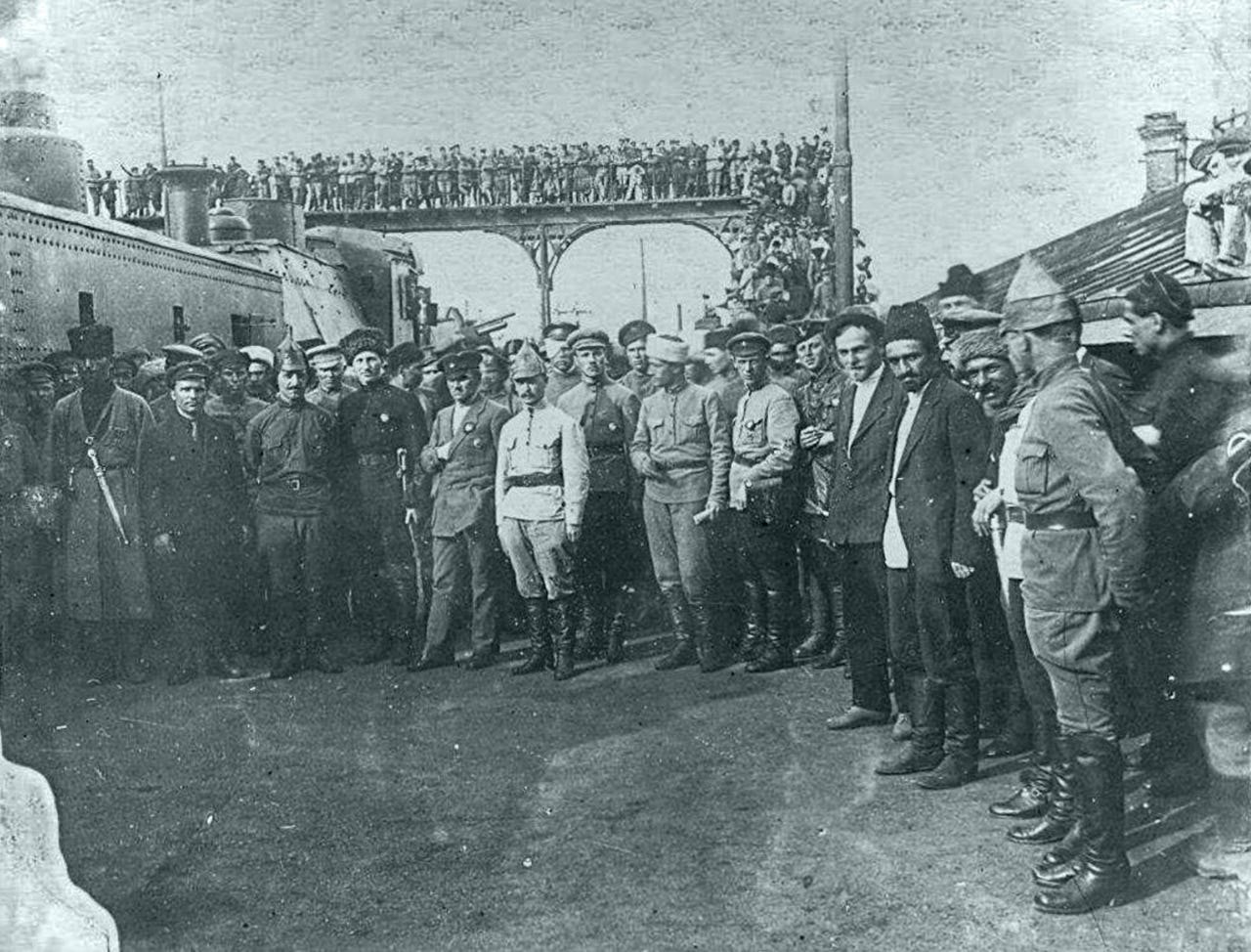
The men who had built the republic scattered. Rasulzade went into hiding in the mountain village of Lahıc, in the foothills of the Greater Caucasus, where he attempted to direct resistance to the occupation. In August, he was captured and brought to Baku. He owed his life to an old debt: in 1905, during the revolutionary chaos in Baku, he had sheltered a young Georgian Bolshevik named Joseph Stalin from the Tsarist police. Stalin, now a figure of growing power in Moscow, intervened to have Rasulzade transferred to Russia rather than executed. For two years, Rasulzade worked at the Commissariat of Nationalities in Moscow before escaping to Finland in 1922 and eventually making his way to Istanbul. He would spend the remaining three decades of his life in exile in Turkey, Poland and Germany. His eldest son was executed in 1938 at the age of 19. His wife died in Kazakh exile in 1940. Rasulzade himself passed away in Ankara in 1955, having never returned to Azerbaijan.
Topchubashov, still in Paris when the republic fell, never came home either. He spent his remaining years lobbying European governments, publishing pamphlets and journals to keep the Azerbaijani cause alive in Western capitals, and growing old in a modest apartment in the Parisian suburb of Saint-Cloud. He died in 1934 and was buried in the city cemetery.
Khoyski, the man who had formed the first government within an hour of the independence vote, fled to Tbilisi after the Soviet takeover. On 19th June 1920, just over seven weeks after the fall of the ADR, he was shot dead on a Tbilisi street by an Armenian militant. He was 39 years old. Yusifbeyli, the last prime minister, escaped Baku but was caught by Bolshevik forces and executed on 31st May 1920, near Kurdamir, on the road east. He was also 39.
Hajinski, who had chaired the Muslim National Council and served in a succession of cabinet posts, remained in Baku under Soviet rule. He was arrested in 1937 during Stalin’s Great Purge and executed. Gaplanov, the founder of Baku State University and teacher of Ottoman literature to its first students, survived longer than most, but he too was arrested in the Purge and shot on 10th December 1937.
Murtuza Mukhtarov, the self-taught engineer who had patented the Baku drilling system, refused to surrender his Gothic-style mansion to the Bolsheviks. When Red Army soldiers came to requisition the building, he shot the commanding officer on the doorstep, then turned the pistol on himself. Taghiyev, the illiterate mason who had struck oil in 1877 and spent the next four decades lavishing Baku with civic projects, saw all of his properties confiscated. He was evicted from his own mansion, which the Bolshevik authorities requisitioned. The old man died in 1924, impoverished and dispossessed, in the city he, more than anyone else, had helped to build.
The destruction of the Azerbaijan Democratic Republic was not merely the unfortunate fall of a small state caught up in the violent birth of the 20th century. It constituted the severing of a promising thread in a broader pattern visible across the Islamic world in the late 19th and early 20th centuries: the emergence of pioneering Muslim elites who sought to reimagine the world around them through the prism of Western modernity, and to harness its potent tools to rebuild an ossified Islamicate civilisation while remaining true to its timeless essence. From the Jadid educators of Crimea and Central Asia to the Nahda intellectuals of Cairo and Beirut to the Aligarh modernisers of British India, this was a generation that tried with all its might to thread the needle between wholesale Westernisation and civilisational paralysis. The founding statesmen of the ADR were in an especially privileged position, possessing both the intellectual and material resources, such as the vast oil wealth of the Caspian, to translate their reformist vision into a functioning state. But the Bolshevik Revolution swiftly stamped out these green shoots on the shores of the Caspian, sealing off the Muslim Caucasus (as it did in Central Asia) from the broader Islamic world for the next seven decades, until the fall of the USSR in 1991.
Author: Bilal Sabbagh works as a geopolitical strategy consultant specialising in the Middle East and North Africa. He is a historian of pre-modern Arabo-Islamic philosophy by training, holding an MPhil in Islamic Studies and History from the University of Oxford.
Artist: All art has been hand-drawn for Kasurian by Ahmet Faruk Yilmaz. You can find him on Instagram and Twitter/X.
Socials: Follow Kasurian on Substack Notes, Instagram, and Twitter/X for the latest updates.
Further Reading
Firuz Kazemzadeh, The Struggle for Transcaucasia (1917-1921)
Tadeusz Świętochowski, Russian Azerbaijan, 1905-1920: The Shaping of a National Identity in a Muslim Community
Tadeusz Świętochowski, Russia and Azerbaijan: A Borderland in Transition
Audrey L. Altstadt, The Azerbaijani Turks: Power and Identity Under Russian Rule
Jamil Hasanli, Foreign Policy of the Republic of Azerbaijan: The Difficult Road to Western Integration, 1918-1920
Further reading on 19th-20th century reformists, statesmen, and general history, from Kasurian:


