
For centuries, the southern and eastern shores of the Mediterranean were shaped by Muslim power: the Ottoman Empire, the regencies of Tunis, Algiers, and Tripoli, the Sultanate of Morocco, and Egypt. Barbary corsairs, imperial garrisons, and merchant networks had long kept the Europeans at bay, or at least compelled them to compromise. Then, almost abruptly, the balance broke.
In the 19th century, the Mediterranean world saw the fall of the Barbary states, which had long commanded piracy across the Mediterranean, the conquest of Algeria by France in 1830, and the permanent establishment of European naval squadrons in the Mediterranean. These events marked the beginning of a new era in which Europe henceforth imposed its rules on the entire sea.
The Industrial Revolution gave European states a decisive advantage: manufactories, steam engines, railways, banks, and rationalised administrations formed an infrastructure of power against Mediterranean economies that had remained, for the most part, traditional. Conscious of the peril, several Muslim rulers attempted to resist by transforming themselves: the Ottoman Tanzimat in Istanbul and Muhammad Ali’s modernisation drive in Egypt were both efforts to modernise the army and bureaucracy and to make the transition to an industrialised economy.
Tunisia did not escape this movement. There too, efforts were made to modernise while piercing the “secret” of European power. It is in this context that Hayreddin Pasha emerged, a mamluk of Circassian origin who became a prominent statesman and reformer in the Beylik of Tunis. He spearheaded Tunisia’s reformist movement through his intellectual work and at the helm of the state. Hayreddin was a true statesman driven by an intellectual passion, convinced that the root of all evils lay less in fate than in the ignorance and slow cultural decadence of Muslim societies.
A Circassian Slave
Almost nothing is known of Hayreddin’s childhood. He himself writes in his memoirs:
“Although I know perfectly well that I am Circassian, I have retained no precise memory of my country or my parents. I must, following some war or some emigration, have been taken at a very young age from my family, whose trace I have lost forever. The searches I have conducted, on several occasions, to find them have always remained fruitless.”
What we do know is that Hayreddin was born sometime between 1822 and 1823 AD in the northwestern Caucasus and hailed from the Abkhaz tribe. It was in these years that the Russian army was advancing south into the Caucasus Mountains, imposing Russian imperial rule on local communities and tribes, and engaging in demographic engineering to reduce the local Muslim populations, culminating in the Circassian genocide in the 1860s.
Hayreddin’s father is said to have died fighting against the Russian imperial advance. The child, deprived of protection, fell into another world: that of the slave trade that supplied the Ottoman Empire with the slave-soldier caste known as the Mamluks. It was in Istanbul where Hayreddin was transformed: no longer the son of an Abkhaz, but as a Mamluk, the property of an Ottoman dignitary, Tahsin Bey, naqib al-ashraf (head of the body of descendants of the Prophet) and qadi (military judge) of the Ottomans’ Anatolian military corps.
In Tahsin Bey’s household, Hayreddin embarked on the paradoxical path of the Mamluk. In the Ottoman Empire, the military slave was not condemned to remain at the bottom of the ladder; he could, if he proved disciplined and gifted, become an officer, then a governor, sometimes even head of state. The enslavement was absolute, but it led to an elite of service: foreign to all domestic factions, the Mamluk could be the prince’s trusted man.
In 1839, the young Circassian’s trajectory took another turn. Ahmad Bey, sovereign of the Regency of Tunis, sent an emissary to Istanbul to congratulate the new Ottoman sultan, Abdülmecid I, on his ascension to the throne. The envoy returned, bearing letters and presents. In his retinue was an adolescent of 16 or 17 years: Hayreddin. He arrived in Tunis as a slave, but was destined to become a pillar of the state.

An Officer of State
At Ahmad Bey’s palace, Hayreddin was instructed as a future officer and administrator. In his memoirs, Hayreddin recounts this decisive moment:
“Raised first at the palace, I pursued my studies there in Arabic in the Muslim sciences and then entered the army, where I acquired my military knowledge under the direction of a commission of officers sent by France to organise and instruct the Bey’s troops. I successively traversed all the degrees of the military hierarchy... I served for some years as aide-de-camp to H.E. Ahmad Bey. Promoted to major-general, the highest rank the Bey can confer, I held in this capacity the chief command of the regular cavalry. But soon, circumstances led me to abandon the army for a political career.”
The Beylical palace became for him an intellectual laboratory. He excelled in linguistic studies, perfecting his Arabic, a language already studied in Istanbul, until he mastered it to the point of using it as the tool of a limpid prose, capable of treating jurisprudence as well as political economy. Through Arabic, he gained access, at the Zaytuna madrasa and elsewhere, to the significant corpora of Muslim sciences: Qur’anic exegesis, hadith, fiqh, and history.
Alongside his linguistic studies, Hayreddin was educated in modern military knowledge. The regency, anxious about the technical superiority of European armies, called upon French officers to organise and instruct its troops. Assigned to the Bardo military school in Tunis, founded in 1840, Hayreddin discovered there the European sciences of physics, mathematics, and biology, and learned French, which would later enable him to read European political and historical literature without filters.
It was at Bardo that he encountered the figure who would shape his political impulses: Mahmud Qabadu. Poet, professor, and sufi, Qabadu was the progenitor of Tunisian reformism and an ardent defender of the Ottoman Tanzimat. He understood before many others that Europe's strength did not come from a mysterious essence, but from its investment in the material sciences and industrial techniques. Qabadu did not content himself with admiring the West but actively advocated the introduction of modern sciences into teaching programmes, their translation into Arabic, and their appropriation by Muslims.
For Qabadu, European domination had developed upon the vestiges of Muslim intellectual patrimony, and it was the duty of Muslims to catch up by reappropriating European sciences. He encouraged the return of ijtihad (independent legal reasoning) among the ulema (Islamic jurists). Under Qabadu’s tutelage, students of Bardo – including Hayreddin – translated their European professors’ courses, adapted science manuals, and reread them in light of Islamic values. A reformist sensibility took shape, a mixture of lucid admiration for European power, acute awareness of Muslim decadence, and the conviction that the way out of crisis lay in the reappropriation of sciences and the reform of institutions, not in the simple accumulation of cannons.
Through providence and diligence, Hayreddin’s military career unfolded with speed. He won his place in the cavalry, the military elite selected in 1839-1840 by the Bey and reserved exclusively for youths of Mamluk origin, and rapidly ascended the ranks: battalion commander in 1840, attached to the Cavalry Quartermaster’s Office in 1842, squadron leader in February of the same year, then lieutenant-colonel in August 1845, colonel in October 1846, and finally brigade commander in June 1850, with the title of general and cavalry commander, before being promoted to major-general, the highest military rank after that of the Bey himself.
His military career thus ended relatively calmly in 1853, the year in which he travelled to Paris in November to accomplish a dual mission: Hayreddin was to negotiate with bankers the granting of a loan that the Bey needed, which Hayreddin would deliberately sabotage, convinced that the terms proposed by the European creditors were disastrous for the country.
Even more important was his mission to represent the Tunisian government in the lawsuit brought against Mahmud ben Ayyad. For 20 years, this former Tunisian senior official had systematically plundered the state’s coffers. Having fled to Paris in 1852 under the pretext of illness, he had himself naturalised as a French citizen to escape Tunisian justice, then dared to demand reimbursement from the Tunisian government of the equivalent of $1.6 billion today.
Behind Ben Ayyad loomed an even more sinister shadow: that of Mustafa Khaznadar, Prime Minister and, after 1862, Hayreddin’s father-in-law (who had married Khaznadar’s daughter, Janina, perhaps to accelerate his political career and secure his bloodline). Ben Ayyad and Khaznadar had amassed colossal fortunes by exploiting the regency for two decades. Fearing that too thorough a trial would reveal his own embezzlements, Khaznadar refused to provide Hayreddin with the accounting documents that would have enabled him definitively to overwhelm his former associate, Ben Ayyad. Hayreddin was being sent to defend a just cause, but the evidence supporting it was being withheld from him.
The trial lasted three-and-a-half years. All elements played against Tunisia and Hayreddin: an accused protected by French nationality, immensely wealthy and well-connected in Parisian circles; a French tribunal little disposed to favour a Muslim state against a French citizen; and above all, a Tunisian Prime Minister actively sabotaging the defence of his own country. No one expected victory under such unfavourable conditions. Nevertheless, Hayreddin persisted with remarkable tenacity before the arbitration tribunal.
The result, though imperfect, compensated for his pains. In total, Tunisia recovered 24 million francs in cash and oil export permits, around $950 million today. This was not the total victory hoped for, but for a country on the brink of bankruptcy, sabotaged from within by its own Prime Minister, this sum represented a providential reprieve.
This relative success, under such hostile conditions, impressed Muhammad Bey (successor to Ahmad Bey). Upon his return to Tunis in January 1857, Hayreddin was appointed Minister of the Navy and entered the Beylical Council. Over the years, he would become president of the Grand Council – that embryonic parliament created by the Tunisian Constitution of 1861 – and one of the most visible faces of institutional reform. Economical by nature and driven by the concern to spare the state onerous expenditures, he contented himself with managing the existing fleet rather than seeking to develop it. The scarcity of means obliged this moderation: as Minister of the Navy, Hayreddin did not aspire to endow Tunisia with a prestigious fleet, but to improve and maintain what already existed. He devoted his energy to creating an arsenal at La Goulette, in the northern suburbs of Tunis, where ships could be maintained and repaired, thus avoiding the very high costs of transporting them to Marseille or Malta.
A fervent reformer, Hayreddin supported the proclamation of the Fundamental Pact in 1857, then that of the constitution in 1861, the first of its kind in the Arab and Muslim world. He supported these texts even if they were not perfect (he clearly saw that they granted exaggerated privileges to foreigners), but because they marked a turning point: for the first time, the Bey’s power was limited, at least in principle, by written rules, by a Grand Council that was to control finances and laws.
Hayreddin actively participated in the work of commissions tasked with implementing the promises outlined in these documents. As a member of the Beylical Council and later as president of the Grand Council, he contributed to judicial reform, which was limited to the penal code and commercial and agricultural matters, without touching personal status, which remained the domain of tribunals strictly applying the principles of Islamic law.
A Familial Drama
But Hayreddin came up against a wall. Behind the constitutional façade, the true master of the regency was still Khaznadar, who had understood that a well-staged reform could serve as an ideal screen for his enterprises: borrowing at usurious rates, squeezing taxpayers, embezzling public funds, and distributing political posts in exchange for loyalty.
Hayreddin first tried persuasion through warnings, cautions, and private conversations, and attempted to bring Sadok Bey (successor to Muhammad Bey) and Khaznadar back to the path of reform. Nothing worked. For them, reform was merely a decor to brandish before European consuls, not a moral commitment.
Adopting a bitter tone in his memoirs, Hayreddin would write: “To the mystification of my adopted homeland, which was being pitilessly dragged to its ruin.” When Khaznadar proposed contracting a new loan abroad on ruinous terms, Hayreddin opposed it with all his strength. He knew, from experience, what these debts meant: budgetary guardianship, the confiscation of customs revenues, and the growing grip of creditors on political decisions. He refused to endorse this policy. His opposition earned him the Prime Minister’s open hostility, who relied on the Bey to isolate him.
In June 1862, after multiple confrontations within the Grand Council, Hayreddin threw in the towel: he resigned from the presidency of the Council, then, a year later, from the Ministry of the Navy. Other reformers – General Hussein, Muhammad Agha, Rostom, ulema such as Salim Bu Hajib or Bayram V – followed him down the slope of withdrawal. All understood that the system did not want to be reformed in depth, that it preferred to sacrifice its best servants rather than renounce the facility of plunder and loans.
From then on, Hayreddin kept his distance from public affairs. He saw coming, with tragic lucidity, what the rise of the mejba (a poll tax), unbearable fiscal pressure, financial dependence, and the intrigues of the consuls announced: the bloody insurrection of 1864, then the bankruptcy of 1869, then, ultimately, “guardianship” imposed by way of becoming a French protectorate in 1881.
Hayreddin deserted political life almost definitively until 1869. The former Circassian slave had travelled a remarkable path. Still, this journey had also revealed to him the limits of individual power in the face of entrenched structures of corruption and the deleterious influence of European powers, that a state could equip itself with modern schools, arsenals, constitutions, and yet remain doomed to ruin, if its leaders persisted in confusing reform with simulacrum, and if justice remained absent from the heart of the state. It was from this experience, lived from within, that his excellent book on the “surest paths” to save a state from decadence would be born some years later.
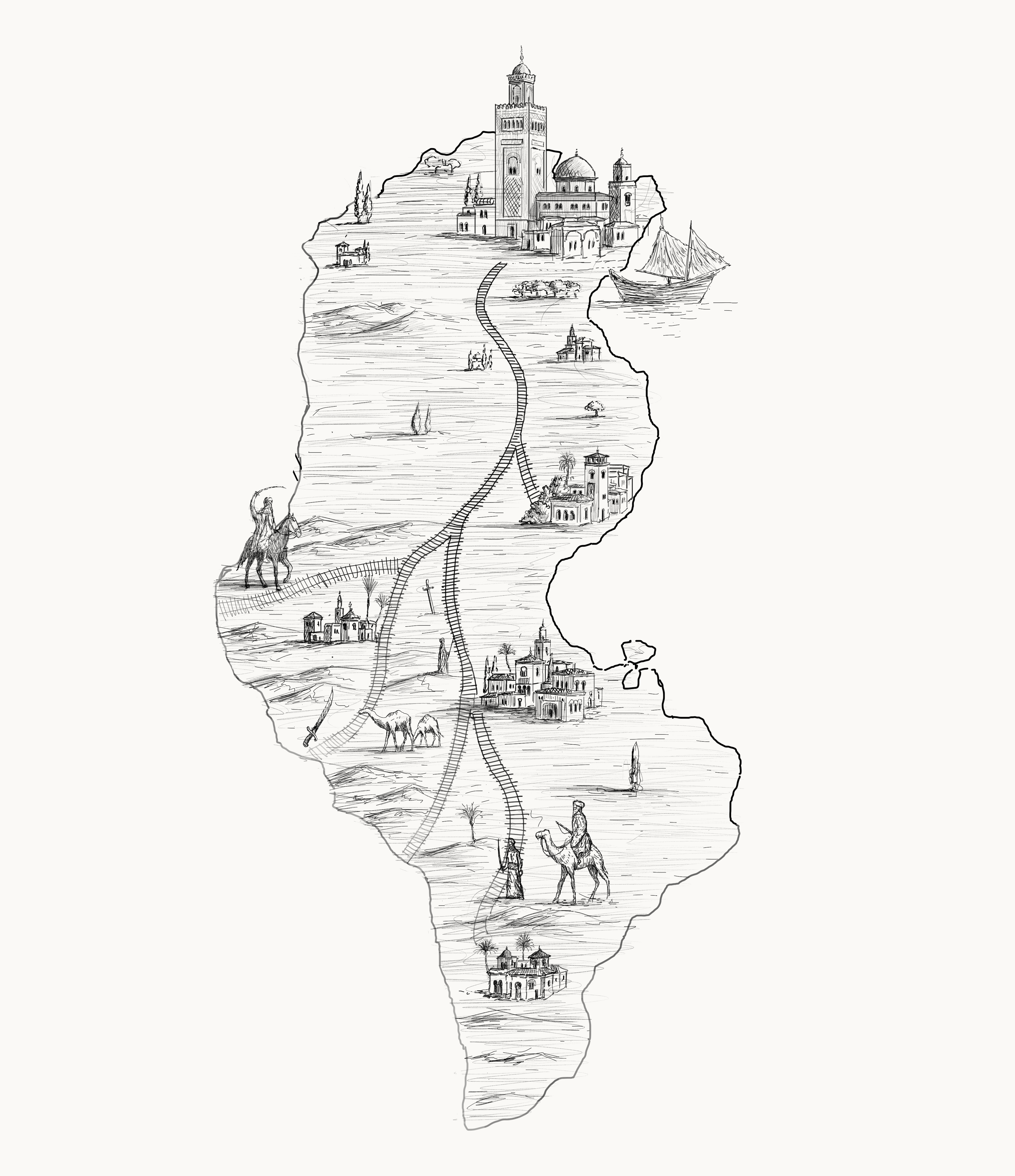
The Surest Path for Knowledge of the State of Nations
The 1860s marked roughly the middle of the Tanzimat era in the Ottoman Empire. The first significant reforms had already been proclaimed, certain new institutions had established themselves, but disappointments were emerging. Superficial reformism, which borrowed European forms without understanding their spirit, was beginning to show its impotence.
Between 1862 and 1869, during his forced retirement from political life, Hayreddin undertook an intellectual project of remarkable ambition. Far from the intrigues of the Beylical palace and his father-in-law Khaznadar, Hayreddin devoted these years of isolation to writing a magisterial work: Aqwam al-Masalik fi Ma’rifat Ahwal al-Mamalik (“The Surest Path for Knowledge of the State of Nations”), published in 1868. This work, which would continue to generate much discussion more than a century and a half after its publication, was a reformist manifesto intended as a governance manual for Muslim leaders.
Aqwam Al-Masalik was the product of Hayreddin’s “long and conscientious research” and his “personal observations” gathered during the missions he had undertaken in Europe. He hoped to offer ulema the means to “better fulfil their temporal role”, and statesmen the means to orient their decisions towards the common good. He set himself the task of presenting the politico-economic state of European powers, particularly those that maintained close relations with the Muslim world. He advocated the acquisition of scientific knowledge, the increase of public wealth through the development of agriculture, commerce, and industry, and above all, the establishment as the principal base of a sound system of government from which would be born that confidence which in turn produces perseverance in efforts and gradual perfection in all things, such as then existed in Europe.
What gives Aqwam al-Masalik its strength is the scope of Hayreddin’s experiences and ability to bridge civilisations. He translated and commented on long passages from French historians such as Victor Duruy and Charles-Emmanuel Sédillot, who recognised the massive contribution of medieval Islamic civilisation to the sciences, philosophy, governance, and institutions to the European economy. Far from contenting himself with this as a simple motive for nostalgic pride, Hayreddin concluded:
‘If Europe was once able to borrow without shame from Muslim scholars what they lacked, why would today’s Muslims refuse to borrow from Europe what they lack?’
This European recognition of intellectual debt to Islam constituted a powerful argument and recalled Qabadu’s teachings. To refuse something just and profitable simply because it came from other people was no longer to seek wisdom but to flatter one’s pride. Conversely, to reappropriate these elements was to obey the Prophetic injunction: “wisdom is the property of the believer wherever he finds it.”
For Hayreddin, the secret of current European prosperity resided precisely in its capacity to borrow what it needed from other cultures:
“If what comes from outside is good in itself and conformable to reason, particularly if it concerns what already existed amongst us and was borrowed from us, not only is there no reason to reject it and neglect it, but on the contrary, there is an obligation to recover it and profit from it.”
On Justice
At the heart of Hayreddin’s reflections in Aqwam Al-Masalik lay a principle he borrowed from Ibn Khaldun: justice is the pivot upon which the destiny of nations turns. Each time a state makes justice the measure of its action, wealth increases, the arts flourish, the army strengthens, and confidence circulates. Each time despotism establishes itself, that arbitrariness substitutes for law, revenues dry up, the countryside depopulates, commerce freezes, and the state, whatever its natural resources, rushes towards ruin.
Hayreddin recalled that Europe itself had not always been this hearth of civilisation that his Muslim contemporaries imagined. He described the centuries of ignorance, political confusion, and the stranglehold of absolute sovereigns who reigned “without being contained by any institution.” It was only with time, when laws, charters, parliaments, and forms of political control were established, that the situation changed. European comfort did not come directly from the Gospel – Christ declared that his kingdom was not of this world – but from the patient organisation of society, from the effort to protect liberty, property, and the security of persons.
The originality of Hayreddin was to show that this movement towards constitutions, consultation, and representative chambers was not a Christian privilege. He brought modern assemblies closer to Islamic shura, those collective deliberations recommended by the Qur’an, and parliaments to the ahl al-hall wa al-ʿaqd, those “people who untie and bind,” that is to say, the notables, scholars, and influential persons who, in classical political theory, frame and, if necessary, correct the sovereign. God commanded the Prophet ﷺ himself to consult, when he could have done without any human opinion. He did so, Hayreddin insisted, to make consultation an obligatory norm for those who came after him. In this perspective, modern constitutions were not foreign intrusions: they represented an updated manner of giving form to an Islamic principle already present.
Within this framework, he emphasised the ulema's role as the community’s physicians. A physician who ignores the diseases of his time cannot treat his patients; likewise, a scholar who contents himself with repeating what he has learned without observing the state of the world, without understanding the new forms of commerce, finance, war, and administration, can no longer guide the Ummah. If he withdraws through misunderstood piety, if he flees the governors in the name of an imaginary purity, he leaves the field free to tyrants.
Hayreddin also emphasised a key pillar of jurisprudence: maslaha, the public interest. He explained that the shariʿa framed the acts of Muslims through precise prescriptions, but that human life constantly produced new situations, for which no explicit text existed. In these cases, if a measure was not contrary to a fundamental principle of the law, if, on the contrary, it served order, protected life, property, religion, and reason, then it was the duty of those responsible to implement it. This was not a shameful concession to modernity; it was the faithful application of the very logic of the shariʿa, which aimed to preserve the essential interests of men.
However, maslaha must not become the pretext for individual improvisation. It required the assembly of competent men: jurists who knew the texts in their depth and their history, politicians who understood local and international realities, scholars aware of technical progress and the transformations of societies. Together, they must discern what truly serves the public good. Hayreddin dreamt of such a leading nucleus, formed of ulema and statesmen working in concert, each controlling and supporting the other, so that reform should be neither a servile copy of the foreigner, nor a deaf repetition of the past.
On the Economy
On economic questions, Hayreddin’s diagnosis was pitiless. He observed that Muslim countries had installed themselves in a humiliating position: that of suppliers of raw materials and consumers of manufactured products. The peasant who cultivated cotton, the stock-breeder, and the sericulturist worked hard all year to sell the fruits of their efforts to Europeans at low prices. In return, they bought back at a price increased tenfold fabrics, arms, tools, and manufactured objects produced with their own raw materials, transformed elsewhere.
Hayreddin saw in this a triple fault: it was humiliating, because it proved the immobility of the arts in the country; it was anti-economic, because it deprived the nation of the gains of industrial transformation; it was anti-political, for it created a mortal dependence vis-à-vis foreign powers, especially when it concerned arms and military materiel. He sharply criticised those who opposed economic reform while rivalling in their clothing, furnishing, and the acquisition of other European products, without making any effort to produce these things in their own country. “There is no way to hide the disgrace and the deficiencies of economic development and public policy that befall the Ummah as a consequence. The disgrace resides in our need for foreigners for most necessities, indicating the backwardness of the Ummah in skills.”
He also understood that the regime of capitulations aggravated this situation, granting foreigners and certain protected minorities exorbitant juridical and fiscal privileges and leading Muslims at a sizeable disadvantage. Far from being simple diplomatic arrangements, these devices placed in the hands of actors escaping local law a considerable part of wealth and commerce. The capitulations hindered the development of institutions because economic capital was in the hands of foreigners and religious minorities who escaped Muslim legislation and taxation. Moreover, this created pronounced inequalities with the Muslim population and reinforced economic and technological backwardness.
According to Hayreddin, a country had to use its raw materials and sell them as finished products. The simple exportation of raw materials constituted a sign of backwardness. He deplored the technological backwardness that obliged Muslim states to export only their raw materials while importing from Europe finished products at considerably higher prices.
This stemmed from “the failure to use our country’s industries to process the goods we have, for this should be a major source of gain.” He insisted on the necessity of having a favourable balance of payments. “Under these circumstances, if we considered the total of what is exported from the kingdom and compared it with the imports and found that the two approximate each other, it would be the lesser of two evils, for if the value of imports exceeds the exports, ruin will unavoidably take place.”
In this, Hayreddin advocated protectionist policies to boost domestic industries. One notes that Hayreddin ran counter to his era, dominated by Ricardian liberal economic ideology, and inscribed himself within a mercantilist approach similar to that of political economists such as the German-American economist Friedrich List and the French Saint-Simonist movement.
On Institutions
Conscious that Muslim countries would miss up their backwardness through moral encouragement only, Hayreddin dwelt at length on the institutions that made great enterprises possible in Europe. He described the functioning of joint-stock companies: their capacity to assemble two or three hundred thousand small shareholders to finance a railway, a canal, a tunnel, a maritime company. He emphasised that no individual, even a wealthy one, would risk all his fortune alone in such operations, whereas association made the risk bearable by dividing it. The spirit of association was the key to outstanding achievements in modern times.
Hayreddin detailed examples of various tasks that were individually insurmountable but could be accomplished through joint-stock companies: the cutting of the Suez Canal, the railway linking the oceans in America, the piercing of the Alps between Italy and France, the railway passage through the Pyrenees between France and Spain, the creation of a tunnel under the Thames in London, the formation of a company called Messageries Impériales possessing great ships visible on all seas, the laying of a telegraph line under the sea from England to America.
Likewise, Hayreddin devoted detailed pages to Europe’s booming financial institutions, such as banks, to their role in the circulation of capital, the conversion of savings into productive investments, and the expansion of exchanges. He showed that a country’s strength no longer resided solely in the gold of its coffers but in the fluidity of its credit and in the confidence inspired by its financial institutions.
For these institutions and instruments of civilisation to function, an atmosphere of confidence was indispensable. This confidence was not born of speeches, but of good government: respect for property rights, rule of law, and freedom of commerce. Hayreddin accorded a central place to liberty, not as an abstract slogan, but as a concrete condition of human activity. Where arbitrariness and fear reigned, capital fled, and minds closed. Where one protected the individual against the caprices of power, initiatives arose, innovation multiplied, and sciences prospered. Throughout the work, he ceaselessly emphasised that what Muslims needed were not exceptional sovereigns whose successors would destroy their achievements, but institutions that framed power and allowed society to defend itself against drifts—in a word, a state of law.
Hayreddin affirmed that all he saw of value and institutions in Europe (liberty, justice, representation, industries) could be appropriated by Muslims without denying their faith. Not only was this possible, but it was a moral obligation. Those who refused these borrowings under the pretext that they came from “infidels,” while rushing upon the products of their industry, condemned their people to being merely perpetual customers, never producers.
Aqwam al-Masalik was a testament to Hayreddin’s refusal to yield to fatalism, convinced that Muslim peoples, if intelligently reactivated, could surprise Europe by the rapidity of their rise. His book was both a mirror held up to his contemporaries and a compass for future reformers, an attempt to reconcile Islamic tradition and modernisation, demonstrating that material progress and fidelity to Islam were in no way incompatible.
Return and Attempt to Save Tunisia
In 1869, as Tunisia was sinking into bankruptcy, Hayreddin was recalled from his retirement to preside over the international financial commission charged with reorganising the country’s finances. This commission, composed of French, British, and Italian representatives alongside Tunisian delegates, constituted a national humiliation: it placed Tunisian finances de facto under European control. Nevertheless, for Hayreddin, this return represented an opportunity to limit the damage and save what could still be saved. The prophecies he had formulated upon his resignation in 1862 had been realised with tragic precision: the usurious loans contracted by Khaznadar, the unbearable increase in the mejba, the insurrection of 1864, the suspension of the constitution, and finally the bankruptcy of 1869. All that he had warned against had come to pass.
For four years, from 1869 to 1873, Hayreddin worked in the shadow of this international commission, attempting to preserve Tunisian interests amid the demands of European creditors. This experience confirmed his worst fears concerning Europe’s colonial intentions. Foreign consuls, particularly the French and English, were not simply seeking the reimbursement of debts: they were using the financial crisis as leverage to increase their grip on the country. Hayreddin then understood that only decisive action at the summit of the state could reverse this disastrous trend.
The opportunity presented itself in 1873. The corruption of Mustafa Khaznadar, which he had exercised for more than 40 years, had become so flagrant, so unbearable even in the eyes of the European powers who had nevertheless long profited from it, that his position became untenable. Hayreddin, strong in his reputation for integrity and competence, strong also in the support of Istanbul, which viewed with ill favour the growing grip of France on its nominal province, managed to overthrow his former father-in-law. In October 1873, he finally acceded to the post of Prime Minister, the summit of power that he had refused to reach through compromise and corruption.
Hayreddin faced a country on the brink. Tunisia was bloodless, ruined by decades of systematic pillage, crushed under the weight of a colossal debt towards European powers, and threatened in its very existence by the colonial appetites of France, Italy, and Great Britain. The international financial commission that he had presided over had transformed the regency into a quasi-economic protectorate. In this disastrous context, Hayreddin harboured few illusions: his objective was no longer to realise the vast reforms he had dreamt of during his years of political exile, but to save what could still be saved, and to safeguard the country’s independence. Nevertheless, even under these unfavourable conditions, Hayreddin achieved remarkable achievements during his brief time in power.
To improve the country’s economy, Hayreddin increased cultivated land from 60,000 to 1,000,000 hectares, a spectacular expansion that testified to his capacity to mobilise the territory’s unexploited resources. He also reformed the customs system to protect Tunisian crafts and industries, increasing import duties by 5% while reducing export duties, in a protectionist approach consistent with the ideas he had developed in Aqwam al-Masalik. He launched public works, notably the paving of Tunis’s streets, which gave the capital a more modern face and facilitated commercial circulation. He developed a railway line between Tunis and Jendouba.
His most significant measures were aimed at the sources of corruption and fiscal injustice that had gangrened the Tunisian state for decades. He cancelled tax arrears that were crushing rural populations, granted a 20-year fiscal relief for new plantations of olive trees and date palms to encourage long-term agricultural investment, and partially suppressed the perverse system by which tax collectors were remunerated according to the fines they collected, a mechanism that transformed them into predators rather than protectors of the population. He ended the costly and brutal system of collecting taxes from nomads through military expeditions. On this last point, Hayreddin argued that nomads, just like sedentary populations, were disposed to pay fixed and just taxes. In his eyes, if the state provided public security and a regular fiscal system, the Bedouins would cease their raids and troublemakers would no longer find refuge amongst the tribes in the face of the central government.
Hayreddin established a regular system of control over the awqaf (religious endowments), ending the embezzlement that had long deprived religious and charitable institutions of their legitimate resources. When the bey attempted to spend the awqaf’s surplus revenues on military reorganisation, Hayreddin firmly opposed it. Military affairs had their own budget, he argued, and it was not equitable to appropriate the awqaf’s surplus. Such a measure would only be permissible in the case of a deficit, and on condition that extravagances were controlled.
In the realm of education, Hayreddin reorganised studies at Zaytuna University, restructured the library, and founded the Sadiki College in 1875, an establishment modelled on European lycées that would train Tunisia’s intellectual and administrative elite for decades ahead. He also created a public library called Al-Abdaliyah. These educational initiatives were an investment in the future, an attempt to create a new generation trained in modern sciences while remaining rooted in an Arab-Muslim culture.
The Roads Not Taken & The Lessons Not Learned
But Hayreddin had to contend with forces that vastly exceeded him. As Prime Minister, he constantly confronted the machinations of foreign consuls, particularly those of France, Italy, and Great Britain. Having been a direct witness to Europe’s aggressive intentions towards Africa, he had come to perceive that Europe constituted the primordial threat to Tunisia’s very existence. The effective reincorporation of Tunisia into the Ottoman Empire represented perhaps Tunisia’s only hope of avoiding occupation. The French government, in particular, viewed with very ill favour the establishment of a parliamentary system and the implementation of impartial justice in Tunisia. Napoleon III had moreover observed, with brutal frankness, that if the Arabs tasted justice and liberty, France could not remain at peace in Algeria. This declaration revealed the true nature of French colonial policy: it rested on maintaining colonised populations in ignorance and injustice.
Domestic opponents were also circling. Another Mustafa, Mustafa ben Ismail, emerged from the shadows after Hayreddin’s departure. The latter adopted the same reprehensible conduct as Khaznadar, thirsting for power and money. The Bey, lending his ear to Ben Ismail, dismissed Hayreddin from his functions on 21st July 1877. Judged too economical and rigid, too intransigent in his defence of the state’s integrity, Hayreddin fell into disgrace. The Bey preferred to him a Prime Minister more flexible and less economical, submissive to his power, manipulable at every wind. This decision sealed the fate of independent Tunisia: four years later, in 1881, French troops occupied the country and imposed a protectorate.
In his memoirs, the judgment Hayreddin passed on this period is unequivocal:
“In leaving power, I left Tunisia in a state of order, tranquillity, and prosperity unknown for a long time. The Bey, his officials, were the same before me and remained the same after me: it is not I who saved them, it is they who lost me, and it is they who lost the Regency.”
Hayreddin did not hide that the Bey also reproached him for being too partisan of the Ottomans. He did not dissemble about being an ardent defender of the rights he considered indisputable of the Ottoman Empire over Tunisia, justifying this commitment by concern for safeguarding Tunisian independence in the face of French influence that had become cumbersome and threatening. The French themselves could see in him only an obstacle to their ambitions and strove ceaselessly to eliminate him.
Hayreddin left Tunisia for Istanbul on the invitation of Sultan Abdülhamid II. Welcomed with honours in the Ottoman capital, he was appointed mushir (personal advisor) to the Sultan before becoming the Ottoman Prime Minister on December 4, 1878. But the rot was too deep. After eight months of vain efforts and Abdülhamid’s non-committal attitude to his counsel, Hayreddin resigned on July 18, 1879.
This resignation marked Hayreddin’s definitive retirement from political life. Until his death on 30th January 1890, Hayreddin lived in retirement in Istanbul in almost total solitude. There, on the shores of the Bosphorus, the former Circassian slave-turned Prime Minister doubtlessly pondered the missed opportunities and the ignored counsel. He was convinced that had his recommendations been followed, Tunisia would not have known French occupation and the Ottoman Empire would have recovered its power. History would prove him right, but it was too late to avoid the shipwreck he had prophesied.
Hayreddin Pasha joined the ranks of other reformist Muslim statesmen of the late 18th to early 20th centuries, such as Tipu Sultan of Mysore and Muhammad Ali Pasha of Egypt. The lessons from their reform – and why they ultimately failed – have not been adequately assessed when considering our situation in the 21st century. Yet their failure, borne mainly of opposition from their own compatriots, has a great deal of explanatory power for why things have come to be the way they are across the Arab and Muslim world. The intellectual insights in Awqam al-Masalik and the practical lessons of Hayreddin Pasha’s statesmanship remain just as relevant today as they were in the mid-19th century.
Author: Salim Jeridi is a data consultant based in Switzerland. He is interested in economic history and developmentalism.
Further Reading
- Arabic Thought in the Liberal Age, Albert Hourani
- A Note on Tunuslu Hayreddin Paşa, Syed Tanvir Wasti
- Consult Them in the Matter, Ahmad ibn Abi Diyaf
- Economic ideas of a nineteenth-century Tunisian statesman: Khayr al-Din al-Tunisi, Abdul Azim Islahi
- Khayr al-Din al-Tunisi and Islamic Reformism as a Synthesis between the West and the Islamic Tradition, Hatice Rumeysa Dursun
- Muslim Reformist Action in Nineteenth-century Tunisia, Mohamed El-Tahir El-Mesawi
- The reflections in the works of Ali Pasha and Tunisian Hayreddin Pasha in terms of International Economics from Europe to the Ottoman Empire in the 19th century, Fatih Yücel
- The Surest Path for Knowledge of the State of Nations, Hayreddin Pasha
- The Tunisia of Ahmed Bey 1837-1855, Leon Carl Brown