

How Zoning Shaped Islam in North America
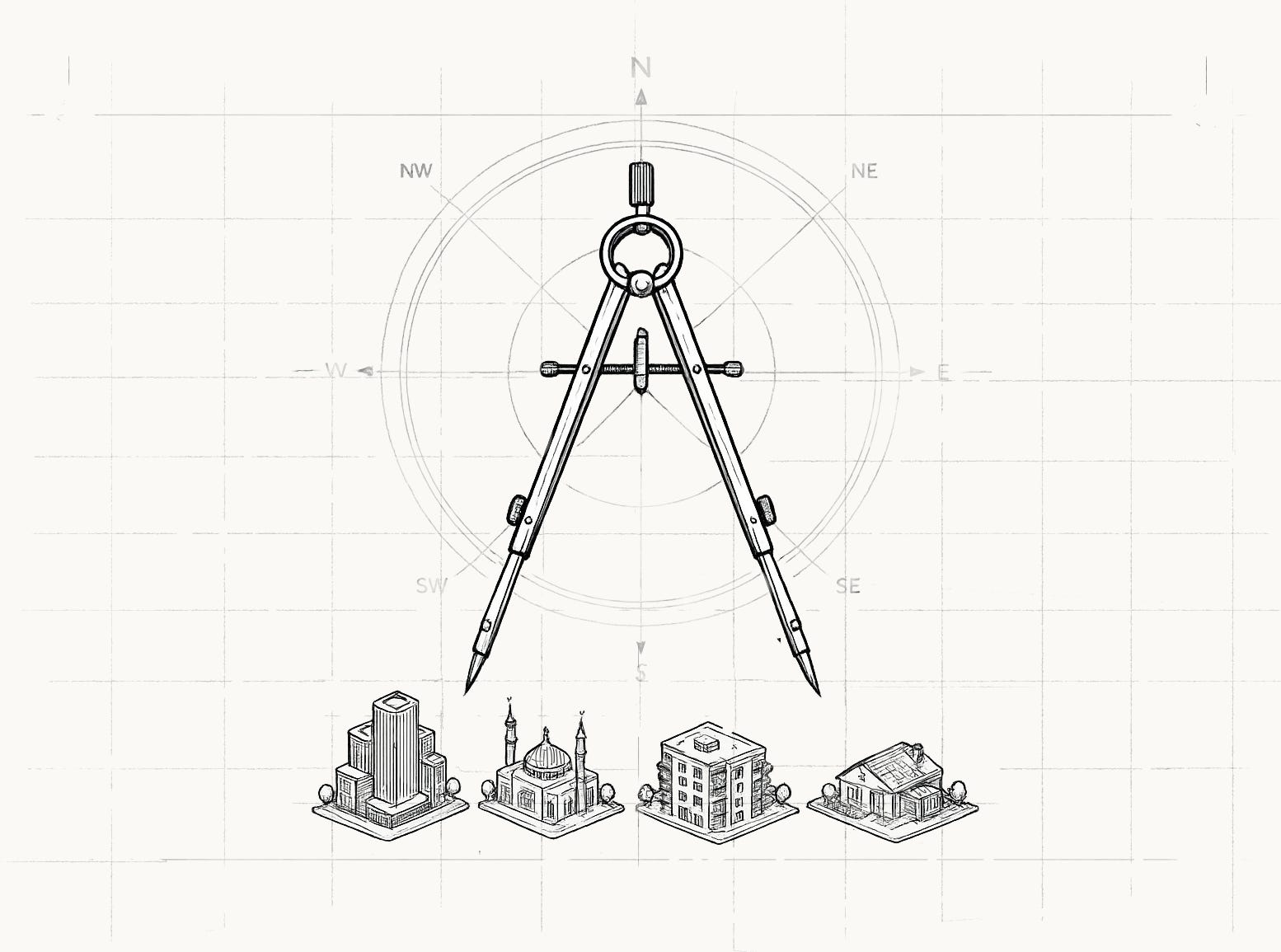
The suburban zoning regime lies upstream of religious life and observance.
A large crowd stands patiently outside a brick building in urban Dallas, waiting for the buzzer to unlock the door. They funnel into the cramped living room of an apartment unit where, every Friday, an imam preaches with his back practically against the wall. One year later, in 1991, the same congregation, numbering under a hundred, will leave this makeshift prayer hall for a behemoth of a building: The Islamic Centre of Irving, a purpose-built mosque on a six-acre tract deep in the Texas suburbs, today accommodating several thousand worshippers on a weekly basis.
The trajectory from grassroots clusters in rented rooms and converted garages to vast, programme-driven campuses on arterial roads is not unique to the Muslims of Dallas, but is a story found in every major city across North America. It is a story usually told as one of progress: the community grew, pooled resources, and built institutions. What is less often examined is what the building demanded in return. What form could the mosque take in the newly planned and uniquely regulated infrastructure of the North American suburb?
In the 20th century, the earliest Muslim immigrant communities on the continent were overwhelmingly urban, less by design than by circumstance. Economic opportunity clustered in city centres where housing was dense and affordable, and so immigrant populations were compressed into urban neighbourhoods by the overlapping pressures of cost and proximity to work. Out of these conditions emerged a religious life that was informal, improvised, and socially modulated. These were not just mosques in the contemporary institutional sense, but overlapping networks of prayer and mutual aid, where worship bled into conversation, conversation into organisation, and authority circulated relationally among elders and peers rather than consolidating in boards and credentialed speakers.
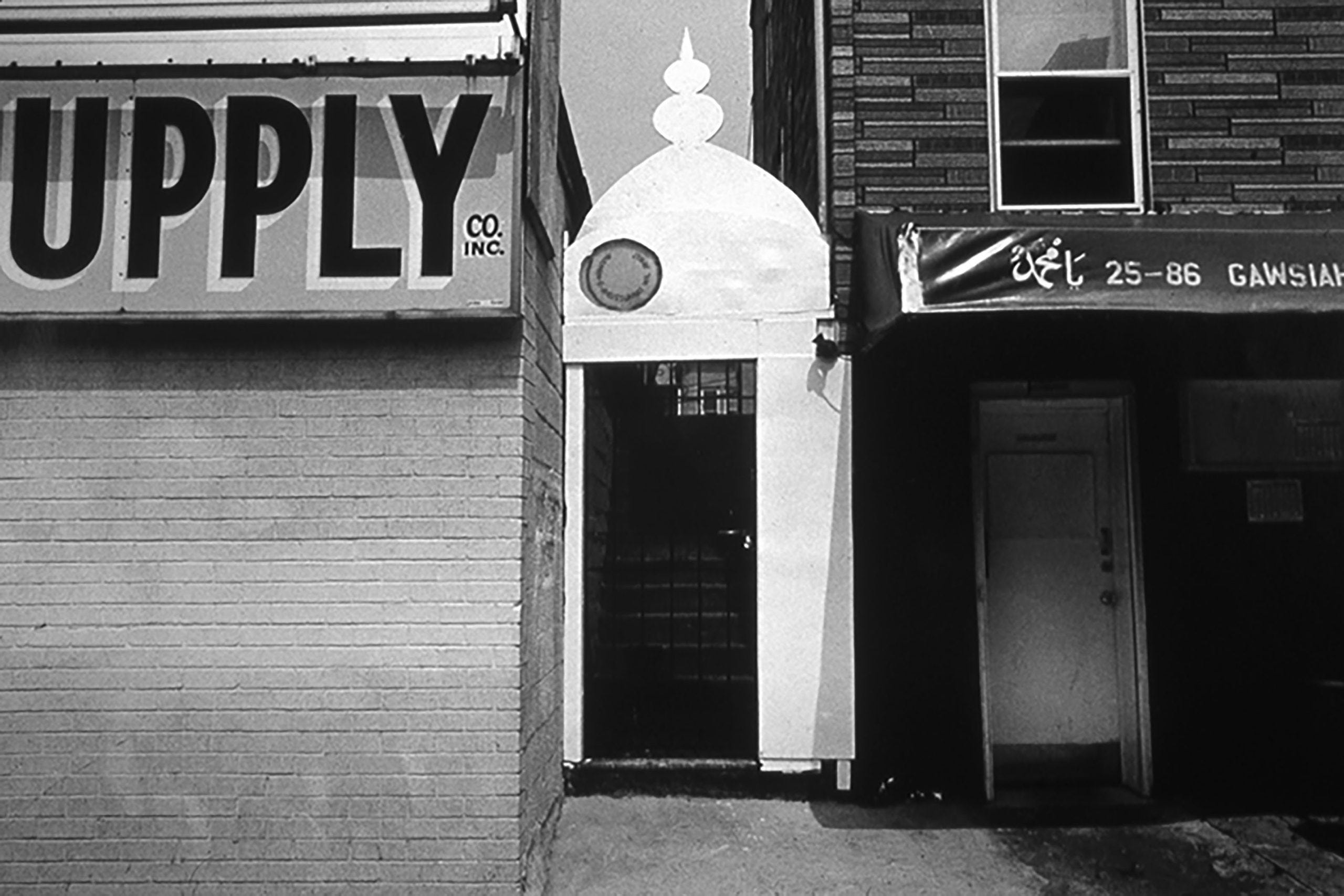
What these spaces lacked in resources, they compensated for in intimacy; religious life unfolded through proximity and repetition rather than planning, and community was produced as a byproduct of daily interaction rather than as an explicit organisational goal. Islam’s own formative institutions emerged under conditions not entirely unlike these: concentrated populations, multifunctional spaces, sustained interaction across economic, social, and religious domains.
As Muslim families moved outward into the suburbs for economic reasons from the 1980s onward, religious institutions followed. But the environment they were received in was not neutral ground. It was a landscape engineered, down to the width of its roads and the separation of its lots, to produce a very particular form of life, and to foreclose all others.
Suburbia as Social Infrastructure
The North American suburb emerged from the convergence of developments in tax structures, large-scale demographic shifts, and the mass construction of infrastructure, all shaped by a particular vision of postwar prosperity. According to this vision, the home was primarily a vehicle for wealth accumulation that must be insulated from any activity that might depress its value. From this single imperative to protect residential property prices, an entire regulatory architecture followed, and it is this architecture, rather than any failure of faith or organisational imagination, that has shaped the institutional possibilities available to Muslim communities in suburban North America.
Zoning laws ensure that suburbs separate functions with a rigour that would have been incomprehensible to any pre-modern city: homes here, shops there, offices somewhere else entirely. The underlying assumption is that proximity to commercial or communal activity introduces noise and traffic that threaten market values. Purpose-built religious institutions are collapsed into a single “place of worship” and typically permitted in residential zones only as a conditional use, subject to parking minimums, setback requirements, and site plan review processes. The cumulative effect of the suburb’s functional separation is that the places in which residents pray, shop, socialise, and work are low-density parcels connected not by integrated street networks but by arterial roads designed for automobiles, with each destination requiring its own dedicated journey. The car is a prerequisite in this environment, and its necessity privileges institutions that can justify large parking lots and peak-hour capacity over those that depend on the steady, low-intensity foot traffic of daily life. The mixed-use religious life that still persists in the oldest downtown mosque campuses, housing above the prayer hall, adjacent to shops and foot traffic, is absent from the suburbs because the regulatory framework that governs suburbs structurally prohibits it.
Beneath both the zoning and the transportation lies a more subtle displacement: the privatisation of space itself, in which the single-family home replaces the neighbourhood as the primary unit of identification. Here, backyard patios replace shared courtyards, and front lawns dominated by garage doors face the street where porches once invited conversation. Atomisation is embedded in every function of the single-family home.
The cumulative effect of these interlocking constraints is to render certain forms of religious life structurally impossible. Suburban planning privileges large, centralised, destination-based institutions, housed in buildings that dispersed populations drive to for scheduled events. This systematically disincentivises forms of religious life rooted in everyday presence, in which moral and spiritual formation was the organic product of proximity and routine encounter rather than a programme to be administered. When a mosque can only exist as an isolated parcel on an arterial road, accessible only by car, surrounded by parking rather than by the lives of its congregants, the question of what kind of institution it can become has already been substantially answered before a single board member is elected or a single programme designed.
Three Cities, One Logic
The consequences of this regime unfolded differently across cities, shaped by the particular histories and demographics each Muslim community brought into the suburbs. The differences are instructive because they reveal the same underlying logic operating in different contexts, compounding pre-existing divisions in one location, converting an established urban form in another, and generating an entirely new institutional species in a third space.
In metropolitan Detroit, the suburban regime did not create ethnic fragmentation so much as harden it into spatial permanence. When Henry Ford opened the River Rouge Plant in 1918, he built dense worker housing in Dearborn’s south end, but only for employees classified as white, a category that included Arabs of Levantine origin while excluding Black workers, who were redirected to Inkster, a western suburb of Detroit. In the following decades, Syrians and Lebanese from the Bekaa Valley followed kinship networks into Dearborn, settling where housing access and zoning permitted concentration, and the communities that coalesced around these settlements built institutions downstream of the sorting that had produced them.
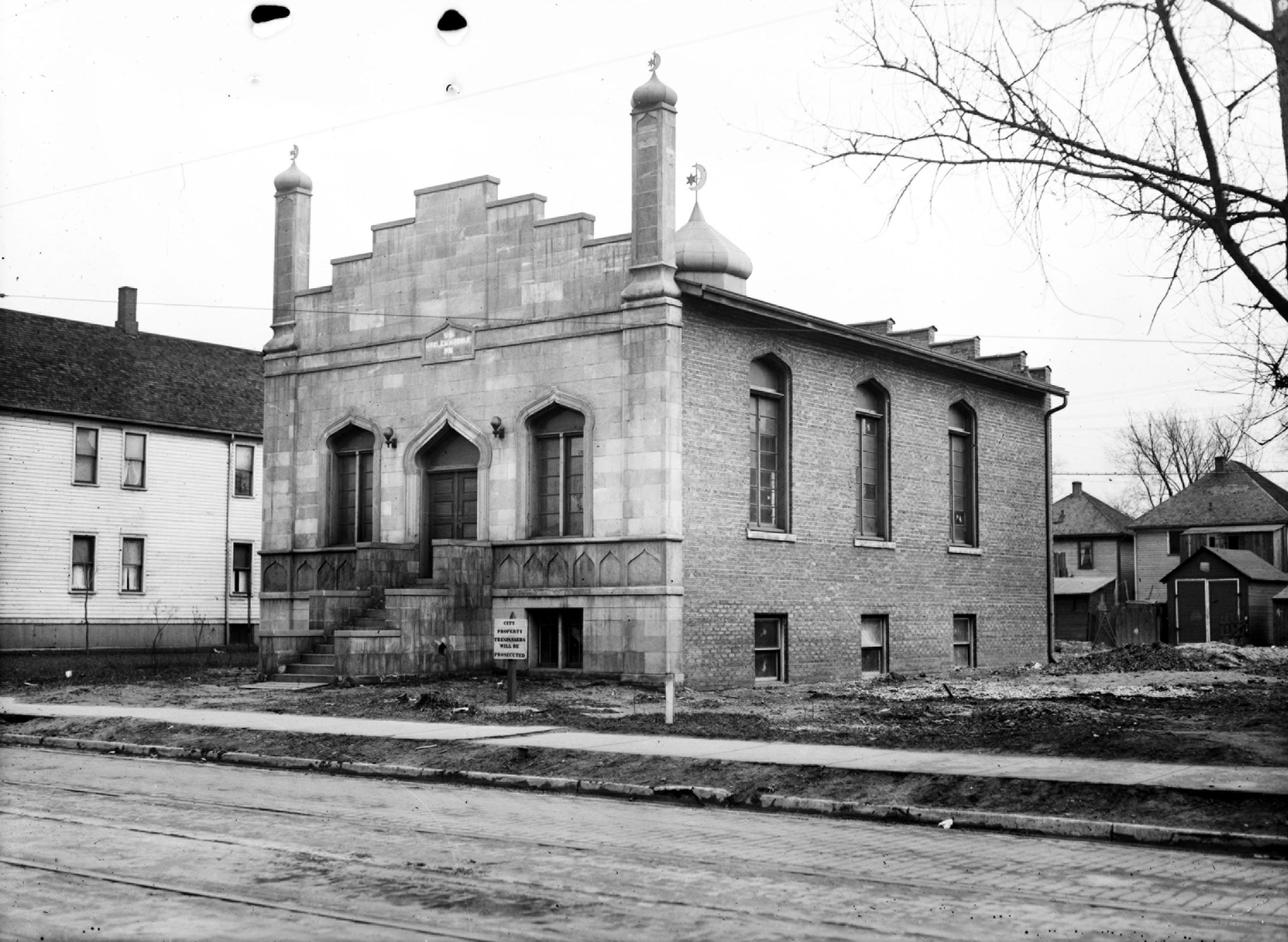
The Highland Park Mosque, constructed in 1921, was itself a product of this concentration: Syrian and Lebanese families scrambling to perform Friday prayers and celebrate Islamic holidays at home until density made a dedicated space both necessary and viable. Services were offered only in Arabic. Halal slaughter facilities required industrial zoning. Arabic schools needed concentrated enrolment. Marriage networks depended on density. Each institutional layer reinforced the ethnic boundedness of the last, creating worlds that mimicked what their members knew from home, communities in which Islamic life unfolded in the constant presence of those who shared a faith, a language, a set of social expectations about gender and authority.
When the 1965 Immigration Act brought a wave of South Asian Muslims into the region, professionals with different expectations around clerical authority and congregational practice found the existing institutions ill-suited to their norms and, rather than negotiating shared practices within them, built their own mosques in Rochester Hills and Canton, 25 to 30 miles from Dearborn, serving Urdu and Punjabi speakers.
Where dense urban geography might have forced diverse Muslim populations into the friction of coexistence, the dispersed metropolitan radius and the ethnic rooting of institutional capital made parallel construction easier than integration. Dearborn today contains 11 mosques serving 110,000 residents within 25 square miles, yet more than a quarter of Detroit-area mosques are dominated by a single ethnicity, nearly four times the national rate.
By contrast, Protestant congregations faced none of these constraints. When white flight accelerated, their institutional model was remarkably portable, requiring neither the ethnic infrastructure nor the immobile capital that bound Muslim identity to place. What Detroit’s suburbanisation privileged, then, was an institutional form defined by the ethnic mosque as a culturally bounded total institution, effective at preserving community under conditions of exclusion but increasingly unrepresentative of second and third generations who find their footing in a shared Islamic identity that cuts across ethnic lines.
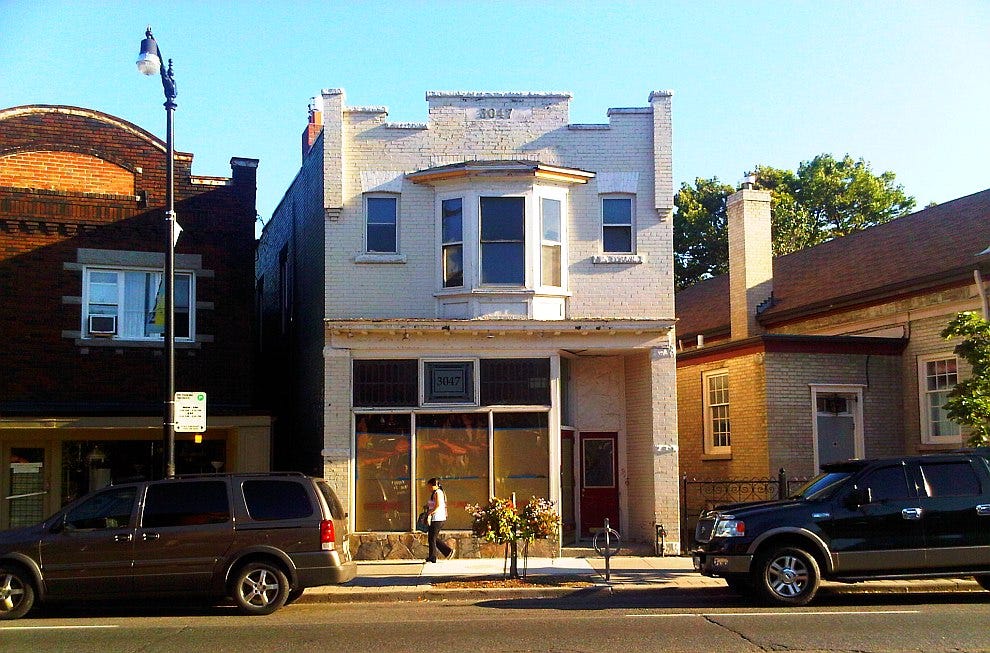
Where Detroit’s suburbanisation hardened existing divisions, Toronto’s transformed an already-established urban institution, reshaping how existing communities organised themselves. Nestled among the renovated storefronts at Dundas Street West and High Park Avenue stands the yellowed building where, in 1965, Malcolm X visited Toronto’s first mosque. The milieu in which the Dundas Street Mosque emerged was thoroughly urban. Toronto’s earliest Muslim community, largely Albanian and Bosnian migrants, lived and worked in dense, mixed neighbourhoods, and out of economic precarity and demographic compression, prayer halls formed in basements, and Eid was celebrated in rented spaces. The imam was at once teacher and cultural broker, his authority sustained by the accumulated weight of daily presence rather than by credentials or titles. This embeddedness made Islam part of everyday life rather than a separate sphere to be accessed on schedule.
By the 1990s, rising incomes among Muslims naturally produced the same aspiration for homeownership that had pulled previous non-Muslim waves from Toronto’s core into the suburban municipalities flush with new, affordable housing stock. Coupled with the scale of Muslim immigration, both the means and the pressure to move outward existed, and with this migration came institutional ambitions that the storefront mosque could not accommodate: intergenerational durability and a consolidated public voice capable of interfacing with municipal governance.
But the suburban environment in which these ambitions were pursued imposed its own institutional grammar. Zoning required buildings to declare a singular purpose. Mixed-use religious life was prohibited. Mosques adopted vertically integrated administrative models, incorporated boards, documented compliance, managed risk, programming justified by measurable outputs, not because their founders preferred bureaucracy to intimacy but because suburban governance required legibility as the price of existence. The horizontal networks in which authority had once circulated were replaced by formal hierarchies capable of coordinating dispersed participation across large catchment areas. Religious practice is shaped by the disciplines and temporalities through which it is conducted, and suburban temporality, defined by the commute, scheduled programmes, and event-based gatherings, reconstitutes religious participation as an intentional act of attendance rather than the passive absorption of norms through daily life.
Yet the same formalised, application-based governance that constrained the mosque also created pathways to institutional legitimacy that did not depend on control of physical space. Organisations such as the Canadian Council of Muslim Women emerged within this framework, operating parallel to mosques, claiming authority through administrative competence and public advocacy rather than proximity to the minbar, a pathway more permeable to women’s leadership than the informal, rapport-based networks that had long dominated mosque life.
The Dallas-Fort Worth (DFW) metroplex presents the clearest case because there was nothing to convert. Muslim migration into DFW followed professional labour markets in engineering, medicine, and technology that were already suburbanised. Unlike Detroit or Toronto, the region offered few dense urban neighbourhoods in which initial mosques might have embedded themselves in everyday life.
Institutions such as the Islamic Centre of Irving, founded in 1991, and the East Plano Islamic Centre, founded in 2003, grew from decentralised gatherings in garages and rented facilities directly into large, purpose-built suburban campuses, with no intermediary phase in which the density of informal social regulation might have generated the thicker communal bonds that characterised earlier Muslim settlements elsewhere. Institutional consolidation preceded social embedding. Both have since directed millions into development and education within their communities; by nonprofit standards, they are highly successful institutions.
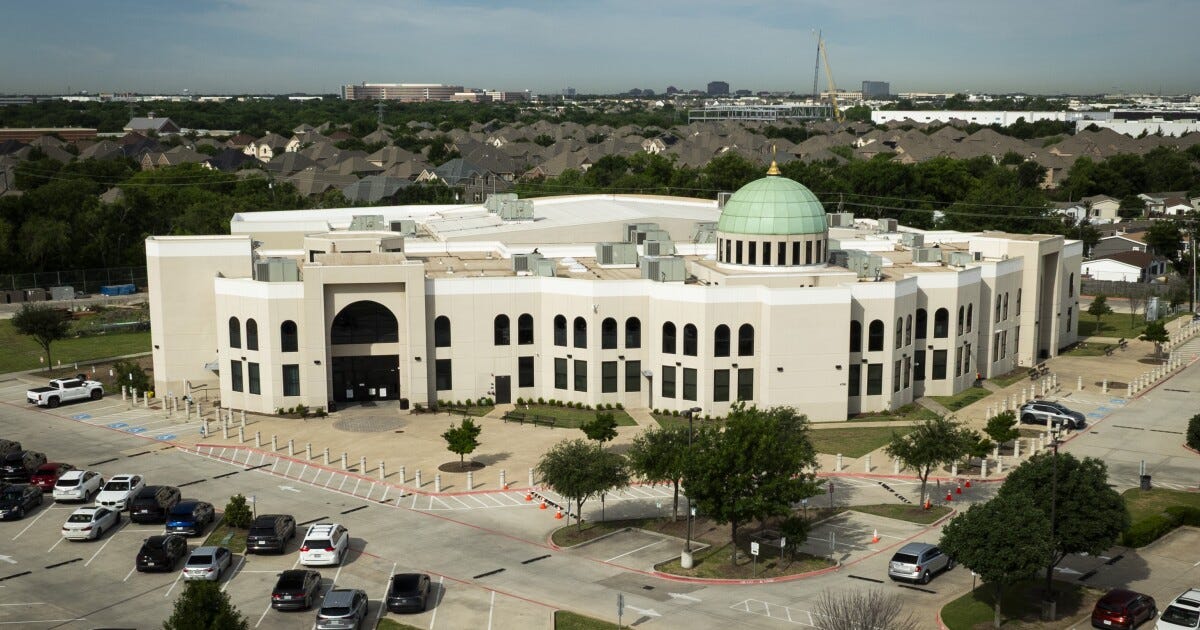
The result is that Islamic institutions have developed a significant organisational presence: financially scaled, administratively capable, publicly legible to school districts and municipal authorities, while religious time is compressed into discrete, high-density events. Friday prayers are crowded; weeknight programmes tend not to be. This pattern, acknowledged by mosque leadership itself, reflects a religious ecology designed around episodic gathering rather than daily encounter, in which the repeated presence that forms a community’s ethical foundation becomes instructive, mediated through scheduled programming, rather than absorptive.
The Price of Legitimacy
These three experiences, those of Detroit, Toronto, and DFW, show how the suburban regime of North America has restructured Muslim religious life.
Large suburban congregations generate the financial scale to sustain full-time staff, counselling services, youth programming, Islamic schools, and professional governance structures that the storefront mosque could never have supported. By conforming to suburbia’s administrative grammar, mosques spent more time incorporating and documenting compliance. The return was a legal legitimacy and political visibility that earlier communities lacked entirely, making them recognised interlocutors with municipalities and school boards. The centralisation of authority that critics lament also enabled institutional coordination, fundraising for urban development and education, which have directed millions of dollars to Muslim communities across the continent. By the standards by which North American civil society measures organisational health, many suburban mosques are thriving.
Yet suburban infrastructure forecloses the low-cost, high-frequency, informal interactions through which religious sensibility was once cultivated as a byproduct of shared daily life rather than delivered as a scheduled intervention. When the mosque was within walking distance, and the imam was a neighbour whose authority derived from the accumulated weight of daily presence, not a weekend appearance, religious formation operated through habituation. Children absorbed the rhythms of prayer by proximity. The new migrants learned communal norms through constant encounters. The elders’ counsel was sought in passing by the accident of shared streets. None of this can be replicated by programming, however sophisticated it may be, as this ambience was a property of the spatial arrangement itself rather than of any institution operating within it.
In the suburbs, participation becomes intentional and event-based, such as through a drive across the metroplex for Friday prayers, a registration for a weekend school, or an RSVP to a community dinner. The relationship between the individual and the institution is altered. The congregant becomes a consumer of religious services, selecting among competing providers based on programme quality and commute time, mirroring the market logic of the suburban environment in which the mosque is embedded. Moral authority, once distributed horizontally among those who were simply present, consolidates vertically in boards and credentialed speakers, who can justify their authority to dispersed audiences who encounter them episodically. The community is recomposed as an aggregate of individuals who share an institution rather than a neighbourhood, and are bound by membership rather than by the unplanned interdependencies of proximity. It is a community that must be produced through organisational effort rather than one that emerges from the conditions of shared life.
These conditions are not restricted to Muslims, but the constraints of suburban institutional life formulated in North America have been applied to a religious tradition whose formative ecology was radically different. Islam’s institutional vocabulary assumed the spatial conditions that suburban planning has eliminated.
Beyond the Terms of Suburbia
The nostalgia for urban intimacy too easily forgets the poverty and precarity that produced it—nor can the past be resurrected in present-day conditions. The question is a matter of tradeoffs. Can institutional design recover the density of everyday encounters without sacrificing the organisational strength that suburban conditions have made possible? This question carries a particular weight when set against the formative milieu of Islam itself, and, perhaps, a sobering recognition of the scope and power of zoning regulations over culture and custom.
Seventh-century Mecca and Medina were not cities in any modern sense, but they were definitively urban, with concentrated populations and multifunctional spaces. The house of Al-Arqam in Mecca functioned not as a purpose-built religious institution but as a node embedded in the living fabric of a commercial quarter, where worship and learning occupied the same rooms and the same hours. In these tight quarters, moral development was cultivated horizontally; proximity forced people to confront poverty and inequality within their own streets rather than encountering them as abstractions delivered from a lectern, and religious authority circulated through presence rather than consolidating in administrative offices. This is not to say that the tenement prayer hall was more true to the faith of Islam than the suburban campus, but that Islam has long been most socially generative where religious practice unfolds within dense, lived environments rather than as a destination removed from daily life.
While not necessarily a degradation of this inheritance, the suburban mosque is a radical departure from the spatial conditions under which that inheritance took shape. The master-planned community proposals emerging from places like East Plano, settlements integrating mosque, housing, schools, and commercial life within a single fabric, represent one attempt to close this gap, an effort to renegotiate the terms of suburban existence rather than simply accept them. Whether such experiments succeed will depend less on the ambitions of their designers than on the willingness of municipal governance to accommodate institutional forms that the existing zoning regime was never built to imagine.
Religious forms are shaped by political economy and planning logics long before faith enters the picture. In this context, the suburban Islam of North America has reorganised belief into institutional expressions optimised for aggregation and coordination. When considering the trade-offs in designing communal life today, one must always be cognizant that the suburban zoning regime reigns supreme, perched upstream as the sovereign decider of institutional forms and patterns of life.
Further Reading
Author: Ali Bukhari is a data analyst and urban health researcher working at the intersection of population health, spatial inequality, and institutional design in Ontario’s health system. His work explores how built environments shape community life, with a particular interest in Muslim suburbanisation and demographic change.
Artist: All art has been hand-drawn for Kasurian by Ahmet Faruk Yilmaz. You can find him on Instagram and Twitter/X.
Socials: Follow Kasurian on Substack Notes, Instagram, and Twitter/X for the latest updates.
I appreciated the note about the departure from urban mutual aide systems to suburban 501c3 spaces.
Recent discourses on zakat violations are often limited to humanitarian aide organizations. Maybe neighborhood mosques need to be audited as well.